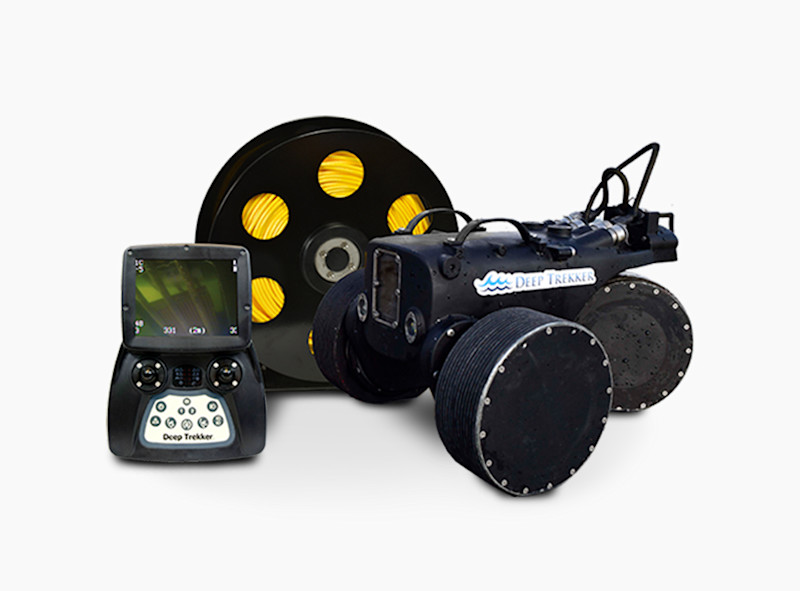
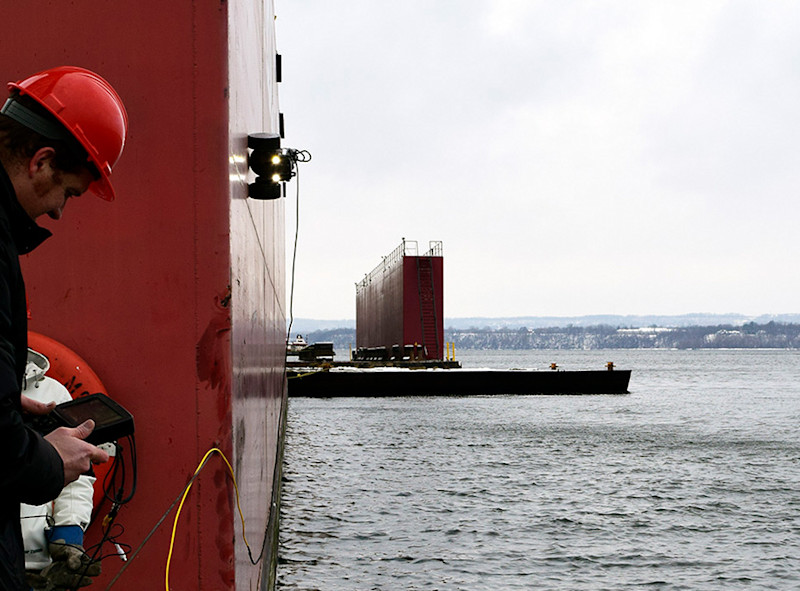
Why is the use of underwater drones (ROV) easy?

How do I use drones?

Our versatile drones are easy to operate with the controller. It certainly requires a good sense of positioning and some experience to use the underwater drones to their full potential, but we offer 1-day courses where anyone can quickly master this sense. So almost anyone can quickly learn how to best deploy one of our drones, what the options are and how to best utilize these options!

But before the drone can be used, it must first be prepared for an operation. The diagram below shows the steps required to get the ROV fully operational. Often the initial steps can be skipped for faster use by keeping the underwater drones partially ready for use.


""

(in picture: REVOLUTION)

Step-by-step plan to get drones ready for use:

The first part applies when the drones are not yet partly ready for use and will therefore be repeated often, especially in the initial phase. For the best duration of use, of course, all items are always properly stored in the appropriate cases. With a lot of use, this may well be skipped, if transportation cannot cause problems or damage.

  • Remove the drone, controller and tether cable from the cases.
  • Display the gear widely for optimal space utilisation.

(These steps can be skipped if the items are stored differently, for reasons including saving time.)

  1. Connecting the ROV and tether cable
  2. Connecting the controller (to the drone) and turning it on
  3. Calibrate the various options of the drone, (optional: perform tests on dry land)
  4. Attaching any accessories to the drone and adjusting them correctly.
  5. Gently launching the drone into the water.

From experience we can say that the accessories take the most time. It is therefore wise to have done this beforehand, so that the time on location can be used optimally.


Opportunities above and below water

The easy part about using our underwater drones is that the inspectors can control what they see. Those who control the drone can put anything they want in a picture, and however they want. This gives freedom because a plan can be drawn up as to what needs to be inspected and this can then be carried out immediately.

Communication between the diver and someone on the shore is therefore no longer necessary; you are in control yourself.

This also brings a disadvantage: the ROV is as good as its operator. This means that it does not matter what equipment is being used if it is not used properly (enough). That is why we offer everyone who we sell an underwater drone or robot, a course to get to know the drones well! This is done with one of our own drones, so yours will never be at risk of damage.

With the 1-day course we guarantee that you will have fully mastered the operation of the drone. If this is not the case, we plan an extra day to help you learn how it works. An investment must be used optimally, otherwise the product is a less valuable asset, and of course we want to prevent that!


What are the biggest benefits of using drones (ROVs)?

On one of our many posts on LinkedIn, we graphically mapped out the advantages of an underwater drone over a diver. (The image below to emphasize it as well)

""

It can make it look like we want to replace the culvert, which is really not our goal. We want safety below the waterline. By being used as a tool for culverts, we can actually help them rather than replace them. Inspections are quicker and easier with an ROV, but replacing a culvert in its entirety is certainly impossible at present. That’s why we are an extension of divers, we can reduce diving time and look for unsafe situations with an ROV, instead of divers (human lives).


Voor vragen over de onderwaterdrones, het gebruik hiervan of wat voor u de beste optie is? Neem dan nu contact op met ons of volg ons op Facebook en LinkedIn!Then contact us now or follow us on Facebook and LinkedIn!

Technological developments, 3D-images and more…

Our technological developments

As a company you are always developing, for the company itself and for the customers. We are growing in the market, stay active on social media and work on renewing the website.

In addition to these marketing specific purposes, there are many more developments underway. Of course we are not going to mention all of them now, this will remain a nice surprise… However, one of the developments is:

3D-images

One of the most technically complicated developments we are currently working on is 3D images. Bert Vierwind is our chosen person to convert the images we take underwater into a 3D environment.

Bert is a student at Van Hall Larenstein studying Land and Water Management. With us he has started to specialize in data improvement. The importance of this is that the data we receive can be presented to the customer in a more streamlined way. By using the images from the camera and sonar for a 3D model, it is always clear where certain cracks or other issues are located.

The images are used from the camera and sonar, and then made into a 3D model. This can be done, for example, of pipes, locks and quay walls.

The following photo is not a real photo:

This is an image of point clouds that result in an image capture. This technology is not yet flawless, but it can be used to produce a good image with many landmarks. Furthermore, we would like to spare you the background of the technological story.


Interview Bert:

Why did you start creating 3D-pictures?

For my studies in land and water management, I started an investigative internship at H2O-Drones. Here the director presented me with a problem the company was facing. Namely, the large amount of data collected by the drone and that still needs to be converted into information with a lot of man hours. The video images and sonar data collected by the underwater robot are some examples of these data outputs.


What can you do with 3D images? And what are the major benefits?

Now there is the possibility of converting video images into a 3D environment via photogrammetry. This is very useful for later to zoom in directly on the interesting parts of the inspection without spending hours watching video footage and comparing these frames. If, for example, there is a crack in an inspected diver, only half of it appears in the video image at one point and the other half at another point shows the other half, a lot of footage has to be processed in order to visualize something small. This takes a lot of man hours and can be solved much more easily by software. The 3D images are one s solution. Here the interesting parts can be easily and efficiently recognised and magnified.


How long do you spend creating a 3D environment?

It varies. For an inspection with imagery of an hour or more, the creation of such a three-dimensional image approximating the inspected environment can take an evening or day. However, there are options to speed up this process and it can be completed within 2 hours if necessary. The image will then be less accurate. It is just where the priority lies.


Do you see a future in this technological development?

There is very much a future in this development. Especially in performing autonomous inspections. Before a drone knows where it needs to be, of course, it must first be able to recognise the environment. Therefore, drones have to be trained and tested. Now there is an option for the software to solve this completely virtually. Although then there must first be an accurate three-dimensional environment in which the programs can be trained. That’s what photogrammetry-created 3D environments are essential for. If you want something to work in the real world, you have to use real-world material.


For more information on the progress of our technology developments, questions or opportunities… contact us!

Stay on top of our claims via Facebook or LinkedIn!

The best pipe inspections with underwater drones!

Challenging pipelines

Pipe inspections are increasingly necessary today. Pipes can have many different negative aspects that affect water, drainage and soundness of structures. We have recently come across many pipes that are (almost) completely silted up, have many cracks in them or where the seams no longer connect properly. Often this is no longer workable and a major repair operation must be carried out or pipes must even be replaced! This brings with it great costs, costs that could easily be prevented.

Inspectie_natte_leidingen-fotoHere there is also a lot of silt on the bottom, but the pipeline is otherwise in good condition.

What kind of pipes can we inspect?

We inspect almost all pipes that water runs through! With an assortment of drones, we can always pick the right drone for an inspection. This coordination means we always get the best possible results from our projects!

We inspect many pipes and conduits with runoff water. This is mainly rainwater and sludge, with the sludge usually consisting of sand, dust and pebbles.

In addition, we can also go through locks. These also need to be inspected regularly, which is easier with drones than with divers.

Both sewers and pipes full of oil, there is little we come across that we haven’t already done! However, we are always curious about new challenges you have in store for us.

Inspectie_natte_leidingen-foto2

The sonar never lets us down! We can always see underwater.

We perform the best inspections in pipes of at least 500mm in diameter. Here we can send in our DTG 3, which is one of our best drones! Smaller pipes are possible, but here we must first discuss the possibilities, which you can already contact us about!

What are we able to do?

  • Ultrasonic thickness measurements
  • Mapping damage
  • Conducting inspections in turbid water with the sonar
  • Taking water samples with the drone

For inspections this is enough, and we can basically map everything. So all pipes can be inspected properly with our drones! Besides inspecting, we also develop, and start offering more and more for you.

Soon (hopefully) so can we:

  • Capture everything in 3D models
  • Remove sludge
  • Perform repairs

What can we offer?

We offer several drones that can handle such inspections! You can do this all by yourself, which means that you always have full control over budget, time frames and images! For regular use, we therefore recommend you to buy a drone, which is a good investment in the long run. Which is also cheaper than constantly renting.

Do you want to do a one-time inspection? Or have an inspection done by professionals? Then you can hire us easily hire us and we will perform the inspection for you! We can offer you these different options:

  • Quality inspection with the desired result
  • Sonar and camera images, properly mounted and made user friendly.
  • Advice on possible next steps
  • 3D models of pipelines and locks

What did we already achieve?

We have already carried out major jobs for various companies and organisations. For example, we regularly work together with the Dutch Department of Public Works, for which we have carried out major assignments. We have also inspected many pipelines at Shell Rheinland, the largest refinery in Germany! We are a regular supplier of Shell Rheinland and in addition we also work together with several smaller organisations regarding developments and inspections!

We have been very active for large and small companies in different areas, and continue to develop in order to give the best results. We would like to have you as our customer, and show you what we can do for you, and what we are capable of!


Follow us on Facebook or LinkedIn to stay up to date with our developments!

How can an ROV rescue drowning victims?

How are drowning victims rescued now?

To rescue drowning victims on call teams are used, consisting of divers and their supervisor. Based on a situation analysis, a grid is laid out in which the diver must search. If this is a grid of 25 square meters, for example, each meter must be searched piece by piece. This is labor intensive and takes a lot of time, time that drowning victims do not always have!

There is always a backup diver who can also be used to relieve or speed up the process, but the safety of the divers themselves must also be considered. No one wants to see extra injuries during a rescue mission. It is therefore important to combine effectiveness and safety for an ideal outcome, but how can this be done?

Who is responsible?

Netherlands Coastguard regulates ‘large’ areas including the coastal areas (Wadden Sea North Sea), the streams near Zeeland and the IJsselmeer. In addition, there are 2 possibilities, a safety region calls in the KNRM, (this however only concerns the inland waterways, including rivers and lakes.) or the safety region takes action itself without communication with the KNRM.

In the latter case, the respective safety region calls on its own equipment. Here they often choose who or what is fastest on the spot to carry out the required actions. (Quote from Safety Region Midden-West Brabant: “In practice, this will therefore be done by the best-equipped party”) This concerns the execution of Search and Rescue missions.


What are the results?

The first thing to state is that we have deep respect for the men and women who work in this sector! And of course, if they had a method that didn’t work at all, this would have been eliminated long ago. So the results are not purely negative.

Results vary by action and situation. In turbid water it is more difficult for a diver to search, and he or she must be extra careful to keep himself or herself safe. Searching by touch here therefore takes a very long time. In clear water situations the search is often already easier and the diver can work better..

The desired result is always to get the drowning person out of the water alive! But unfortunately this is not always possible. If a drowning person has been trapped underwater for several minutes, the chance of survival are slim. This is very unfortunate, but even then it is important to get this drowning person above water. This offers security and closure options to family and friends of the deceased.

How can we help?

So the desired result is not always achieved yet! This is a big problem, which we can reduce. With the underwater drones there are more possibilities underwater and this will therefore improve the response and search time!

We are able to:

Reduce the search time:

  • We can reduce the search time by scanning out in front of the diver with the sonar, thus reducing the search area. (Visibility up to 30 meters on the sonar!!!)
  • Giving sight in turbid water, so images are not purely by touch.
  • Helping with the search in another area, cutting the search time in half.

Contain the risks to diving teams:

  • Conduct safety and risk analysis prior to dive, and identify hazardous areas to the diver.
  • Entering unsafe areas themselves.
  • Be able to monitor divers for safety during the dive, and assist with problems if necessary.

Helping to surface drowning victims:

  • With the grapple, we can attach ourselves to the drowning person, and help get them to the surface.
  • Float above or against a drowning victim, and let a diver swim down via the thether.

Learn more about what we can do in the  Search-  and Rescue sector!

The difference of H2O drones:

So, as stated above, we offer many different benefits, which each person has to weigh for themselves. Our main views are about safety, of everyone above and below the water. This can be done by inspecting before and after a diving action, analyzing images and situations and evaluating them.

The ROVs can take a beating, and would rather get into a (potentially) unsafe situation than you. Drones may come with a price tag, but you can’t say this about human lives!


Would you like to know what else we can offer you?  contact us and follow us on  Facebook or  LinkedIn.

Why only a side scan sonar is not enough

What is a side scan sonar?

A sidescan sonar is a sonar that is hung on the sides of ships, hence the name. It can also be attached under ships or separately. This sonar takes images of the bottom of the sea, rivers or lakes. These are images that are therefore taken from above. A sidescan sonar often has sharp images and is useful for quick analysis of bottoms. There are many different types of sidescan sonars, for specific product information and the right tuning we recommend you to visit the website of Blueprint Subsea .


Figure 1 from Development of a side scan sonar module for the underwater simulator | Semantic Scholar

asily explained: a sidescan sonar takes sonar images of the bottom from above. This shows very detailed images.

What is a side scan sonar capable of?

A sidescan sonar can be attached to the side or bottom of ships for bottom analysis. Usually one is attached to both sides of a ship, for overlapping images and a wider spectrum. This sonar can take different images and find objects on the bottom

Take a look at a picture taken by Blueprint Subsea!

With these images, both size and design can be mapped, providing a reasonable picture of the objects on the ground. This often allows one to see what an object is, and how it is laying on the ground.

What is the best use of it?

The side scan sonar is best used for general bottom scans. The entire bottom can be scanned and if there are deviations from normality, a good image can be used for object analysis. For example, wrecks, drownings and rocks can be detected. For inspection of large areas, these sonars are ideal, they scan the bottom in detail and provide an excellent image quality for further analysis.Therefore, it is a useful product!

What is missing for a good analysis?

The side scan sonars are good, and can easily be used for bottom scans. But there are drawbacks to this as well:

  • Only image from above
  • Difficult to assess situations

Because the image is only from above, the size of objects can be mapped, but not their height. Whether a piece of rock is one or three meters high can make a lot of difference in rescue operations.

In addition, the situation of objects on the bottom cannot be mapped either. For example, the bottom of a wreckage may be broken, or may have become completely jammed. This cannot be seen from above.

Side-scan sonar image of shipwreck "Aid" in Estonia

This is one of the images that can be made with the sidescan sonar!

From this image you can see that there is a wreck of a ship on the bottom, and what the size of this wreck is. How high this wreck is, however what the bottom and sides look like cannot be determined from here.

How can the ROV fill this gap?

The above situations leave a gap in analyses plans for operations. With a ROV with forward looking sonar, these gaps can be mapped quickly and accurately.

These underwater drones can sail to the bottom and map the situation, making analysis of images complete! With the additions of underwater drones (ROVs), there are images from above, and 360 degree views of all possible angles around situations. This can be done through forward looking sonar or with the 4k – UHD camera.

This puts the analysis of operations in a better picture, allowing rescue or salvage operations to be initiated.

Mooiste wrakduik' nu ook online in 360 graden te bezichtige... - De Standaard Mobile

In this image, the condition of a shipwreck is well depicted; from the top, it was not so clear what this wreck looked like.With drones, the images can also be viewed from the side, and the condition of wrecks can be determined more easily.

Deploying underwater drones in rescue operations (of drowning victims)

It can also make a difference in rescue operations of drowning victims. A drowning person is generally difficult to see on images from side scan sonars. An estimate can be made from the images from above and determined to be a drowning person, but with real-time images of the drowning person, there is much more certainty.

Tritech's StarFish Sets the Standard in Search & Rescue | Tritech | Outstanding Performance in Underwater Technology

This is a sidescan sonar image, presumably of a drowning person. To know exactly what is going on here, something or someone must be sent to the bottom. For that purpose there is nothing faster and more efficient than an underwater drone from Deep Trekker!

When it is determined that a drowning person is on the bottom, normally a diving team has to be called in to determine the exact situation and to pull the drowning person out of the water. When an underwater drone is added to the equipment as standard, a drone can be underwater within 5 minutes to carry out an analysis, which is much faster! The images from the underwater drone can also be viewed immediately from dry land, allowing the situation to be assessed and the correct actions to be determined.

This also offers the possibility to immediately bring the drowning person to the surface, with the grippers that can be attached to the REVOLUTION  the drowning person can be brought to the surface carefully, and within 10 minutes of the assessment already be on the surface! This is a huge time saver and is therefore very efficient, and actually indispensable in the toolkit of search and rescue departments.


Do you want more information or contact us?  Follow us on our social media websites Facebook or LinkedIn to always be informed!


Why do we work with Deep Trekker?

In the world of underwater drones, there are many manufacturers, each with their unique points. Deep Trekker is one of them. This Canadian company has now become one of the market leaders in the field of underwater drones and robots!

Deep Trekker’s products are innovative and provide good solutions to existing problems, such as:

  • Security
  • Data processing
  • Deployment
We (H2O-Drones) chose Deep Trekker out of several points of view. They are known for quality and durability. Our corporate identity should also be quality, we do not want to be associated with bad products! Deep Trekker is one of the forerunners in the market in terms of technology and innovation. This makes it fun and challenging to be the exclusive salesman for the Netherlands. And a salesman for Germany and Belgium.


Look at the YouTube channel for an introduction!

Quality Products


We primarily use only two underwater drones: the DTG 3 and the REVOLUTION. For inspections, these are the best drones available on the market today, in the context of onshore inspections. We mostly use them for the inspections of our customers.


DTG3:onderwaterdrone-rov-deeptrekker

The DTG3 is a relatively small drone, which can mostly be used to inspect pipelines. Due to its size, it fits perfectly into pipes and tubes up to 500mm. The DTG 3 has a 270o rotating camera that can easily inspect both the top and bottom of pipes, locks, tubes and water tanks. Because the camera can rotate at this angle, it is easy to hold the drone in position and only move the camera. Because the camera records in 4k-UHD, the images are always of quality if you want to review them later.


Besides the camera, the drone is also extremely maneuverable, which makes inspecting and cruising with the drone never boring. The manoeuvrability allows for faster inspections, which saves a lot of time in the long run. Next, to being manoeuvrable and allow for fast inspections, the battery lasts up to 8 hours. This is more than enough for a full day of inspections. If, on rare occasions, you need to inspect longer in a day? Then within 90 minutes drone is fully charged again and can last another 8 hours!


In addition to the small pipes, the DTG 3 also feels at home in larger waters. For example, this drone can dive up to 200 meters deep. At these depths, of course, there is not much light, but this is not a problem for the drone either! The drone is set up for dark areas and can also obtain good images here, this is due to an extra set of lights built into the DTG 3 at the  Expert and Navigator packages!!


REVOLUTION:

The REVOLUTION is a larger and heavier drone than the DTG 3, and weighs 26 kilo. We use the REVOLUTION mostly for larger inspections. Because of 6 thrusters (propellers) it is possible to move in all directions, even laterally!


The REVOLUTION is also the only drone in the world that has a rotary head system. This allows the entire head with camera, lights, laser scaler and sonar to rotate freely without moving the rest of the drone. With Deep Trekker’s BRIDGE technology, it is possible for the drone to hover perfectly in the water and stay in the same position, even with slight currents. The 260o rotating head can then be used to inspect both top and bottom.

Because of its size and weight, the REVOLUTION offers endless possibilities for accessories, from Deep Trekker  or homemade!

For example, we ourselves always use sonar, a grabber at the front (to protect the drone) and possibly laser scalers. In addition, we have added our own cameras and lights for research purposes. The possibilities are endless and the REVOLUTION can sail even with a few extra kilos attached!

Also by using the GPS there are many deployable possibilities. It is easy to determine the location in Search and Rescue missions, to see how far this drone is in pipelines during inspection, and to always know accurately where the drone is.

The batteries are also easy to replace, so missions and operations can always be resumed quickly by using a spare battery!


Services:

We offer various options regarding inspections. From Deep Trekker we stimulate sales in the Netherlands and Belgium, but we also support the companies and individuals who are not yet ready to buy options. We do this through rental, where we are hired to inspect and deliver data.

If you want to buy  a drone, the cost is high once, and you will benefit from it for a long period of time. You can choose which drone you want, and what kind of package is required for this. This depends on the situation, the objects you want to inspect and the size of the passages in relation to the drones. We will of course help you with your choice and can assist and advise you. We even offer a warranty on the drones, because we are convinced by the quality. The warranty is at least 1 year!

If you do not plan to use the drone for regular use, or you prefer that professionals inspect it themselves (because you do not have the time) or the use will only be for a short period of time, it is wise to rent instead of buying. Renting always includes:

  • A professional operator
  • tailored Drone
  • Accessories to get every job done right

Of course, there are a number of additional options when renting, for that you can always contact us!

We are therefore the proudest retailer in the Netherlands, Belgium and Germany for Deep Trekker and hope to be able to represent the interests of this company for even longer, in order to create more support for safety.


For more information, visit the  the website of Deep Trekker, or follow them on their social media pages.

Want to know more about us? Contact us via Facebook or LinkedIn.


What to think about when cleaning a drone

The importance of a clean drone is crucial!

To maintain optimal water quality,  a regular tank inspection and cleaning is a necessity. Unfortunately, traditional tank operations can come with numerous costs and problems, such as hiring divers, draining tanks and suspending service.Om de waterkwaliteit optimaal te houden, zijn regelmatige tankinspecties en -reinigingen een noodzaak. Helaas kunnen de traditionele tankbewerkingen gepaard gaan met tal van kosten en problemen, zoals het inhuren van duikers, het aftappen van tanks en het opschorten van de service.

Deep Trekker‘s underwater drones allow users to perform precise inspections from above – without draining tanks or taking them out of service. In addition, the use of robots keeps divers away from unnecessary risks and complications.

By using the ROV camera’s live video feed, pilots can complete the inspection while recording everything the ROV sees. Simultaneously, photos or videos can be taken and voice notes can be recorded with the video for archiving and review purposes. With Deep Trekker, consistent and accurate inspections can be performed with a minimum of time and financial interference. Impact on drinking water and nature is therefore paramount, and keeping a drone clean is easier than a human!

The DT640 VAC  allows users to clean a tank floor. The suction head allows operators to effectively clean sediment and sludge through a pump and hose attached to the suction head. allows users to clean a tank floor. The suction head allows operators to effectively clean sediment and sludge through a pump and hose attached to the suction head.

The convenience of an underwater drone!

One of the biggest risks of putting divers in tanks is the risk of contamination from their equipment or personal bacteria if they don’t follow a strict procedure. There are many “corners” on a wetsuit that can contain bacteria and other potentially harmful substances for drinking water.

“It’s nice to save my divers from unnecessary climbing or entering a tank that was in good condition,” adds Jake Spaulding of Mountain West Commercial Diving, “It’s so much more fun to take the ROV to the top of a tower than to send a diver with equipment up a ladder of 22 meters. Now we only send divers if we know that it is necessary.”

Due to their ease of use, portability and ability to be thoroughly cleaned and disinfected, Deep Trekker underwater robots are ideal for inspecting and cleaning drinking water tanks, among other things. When working on drinking water tanks, there are specific procedures that must be followed to ensure the cleanliness and safety of the water. Not sure what a good procedure is for drinking water tanks or pipes? We’ve outlined the main steps for cleaning an ROV used by industry professionals below.


1.CHECK THAT THE EQUIPMENT IS INTENDED FOR DRINKING WATER USE ONLY.

It is imperative that the ROV and related equipment be used only for drinking water. Find a process that works for you and your company to control which vehicles are used exclusively for drinking water. It may also be helpful to have a system to track where and when each vehicle has been used to serve as further confirmation. Therefore, never use drones unnecessarily for different purposes, cleaning never gives 100% exclusion!


2. OBTAINING NEW (UNUSED) PLASTIC SHEETS.

Plastic sheets are necessary for thorough cleaning of the vehicle. The use of plastic sheets prevents the vehicle and associated equipment from being placed on the ground, and therefore, remains clean. Although these plates are disinfectible, it is important that these plastic plates are unused to further verify cleanliness.

The vehicle and cable, as well as any cords, ropes or additional equipment, will later be spread out on these plates for cleaning


3.OBTAINING A DISINFECTANT SOLUTION.

Disinfectant is essential for properly cleaning and keeping the drone clean. There are several guidelines that this must meet, and this can vary from authority to authority. A chlorine solution is often the most commonly chosen solution, and also recommended by us.


4. DISINFECT PLASTIC SHEETS USING THE DISINFECTANT SOLUTION..

By using an approved disinfectant solution, the plastic sheets should be thoroughly cleaned. Unused disposable protective gloves and clothing are required during this procedure to protect the personnel involved.

5. VEHICLE AND CABLE ARE PLACED ON A CLEAN AND DISINFECTED GROUND SHEET AND SPRAYED WITH DISINFECTANT.

Place the vehicle and cable on a clean and disinfected ground sheet. Spray the material thoroughly with the disinfectant.

All plastic ropes and cables, used for example to hoist a vehicle, are treated in the same way. All disinfected cords, cables and equipment are placed on clean, disinfected ground sheets while other parts are treated.


**Attention: these procedures are guidelines only and do not follow official regulations. Regulations vary somewhat from region to region, so it is important to consult with your local authorities about best practices. We provide you with guidelines here, which can be taken into account.


From inspection to action!

Effective inspection and cleaning is critical to good water maintenance. In water storage tanks, water sits virtually still. Over time, sediment sinks to the bottom. Even your drinking water has some particles and minerals in it. Small amounts of sediment do not affect the quality of the water or the health of those who drink it, it also has almost no impact on the structural integrity of the storage tank.

But as this sediment builds up over time and mixes into thicker sludge material, it can affect the quality of the water and the structure of the tank. Every tank manufacturer recommends regular inspection of the water tower and subsequent cleaning of the tanks to ensure long-term integrity.

With a robot, such as the DT640, you can perform tank cleaning efficiently and at regular intervals to prevent sediment or sludge from accumulating over time. The low cost of the vehicle makes it realistic to have an ongoing water storage tank maintenance program, either as a service provider or as the municipality itself.

Benefits of a ROV

Without an ROV, the inspection and cleaning of water tanks is usually performed by commercial divers. This involves using a team of divers and spotters to enter the confined space. This can be both risky and expensive.

In addition, placing a human diver in drinking water is not the most sanitary option. It is difficult and expensive to sanitize an entire diving suit, which may also have been used in non-potable water applications before entering the tank.

Options that apply to drinking water tanks often also apply to protected natural areas. Here, of course, no negative effects may appear on aquaculture. By cleaning and maintaining an underwater drone, these negative effects do not apply, and inspections can be done safely and easily. This gives unique opportunities because not everyone is allowed to inspect in protected areas without proof that there are no negative side effects.

Deep Trekker ROV for High Arctic Research | Hydro InternationalBron: Hydro-international.com

Even under a layer of ice, our drones are ‘just’ usable. It is easy and you are spared most of the cold! In these areas where humans hardly ever visit, it is important that the impact is brought to a minimum.


Would you like to know more about the possibilities of drone cleaning? Or would you like to know what resources we use, or how we deploy the drone in “clean” areas? Then get in touch via Facebook of LinkedIn!


Ship inspection and proper matching of accessories!

We help you with the ship inspection of all kind of ships. Boats, ships, vessels… All different words for the Hull inspection we can provide for you and your company!

Maritime shipping remains the primary method of transporting billions of euros worth of goods. In such a huge industry, safety is incredibly important. Using an underwaterdrone / or ROV, operators or drivers, can safely and efficiently carry out inspections of underwater vessels.


WHY IS A SHIP INSPECTION SO IMPORTANT?

The inspection of seagoing vessels under water is important for many reasons;

  • Save money and time by understanding what is happening under your vessel without the intervention of divers.
  • Make the best use of the necessary dive team time by doing a pre-inspection with an underwater drone.
  • Proactively manage your fuel efficiency by performing regular ROV inspections of your hull to determine optimal cleaning and painting schedules.
  • Regular hull inspections are a way to prevent damage and corrosion on and under the boat.
  • Carrying out hull inspections can provide insight into whether or not the structure and load-bearing capacity of your vessel is at risk.
  • Underwater hull inspections confirm that your hull is free of barnacles and other marine life.
  • Provide peace of mind!


WHAT IS AN UNDERWATERDRONE?

Underwaterrobots or ROVs are underwaterdrones that enable users to read up on serious environmental problems. Deep Trekker ROVs are portable, affordable, high quality and easy to use, providing solutions for various underwater projects.

As innovators in the underwater ROV industry, H2O Drones can provide the right robotic system for your needs. Commercial grade, low maintenance and durable, H2O Drones’ underwater robots are easy to transport and deploy.

As the official certified distributor of the Netherlands and Belgium we are the ideal step in between, we have a lot of expertise and experience. With this we can help everyone in a tailor-made way, assess situations and determine what the right next steps are.

Deep Trekker offers two brand new, innovative underwater drones: the DTG3 and the REVOLUTION.

Intelligent and advanced, the DTG3 is the best in its class. The mini underwater drone is built to allow operators to quickly deploy and visually inspect within the underwater environment. With depths of up to 200 metres, the battery-powered vehicles last up to 8 hours! The highly manoeuvrable underwater robot is transported in a single case and is built to last. The camera provides excellent real-time 4k live video, even in low light. In addition, it is also small, and can enter all corridors, locks and pipes that are 500mm in size.

The REVOLUTION is a completely improved ROV. With a larger payload and advanced stabilisation systems, the REVOLUTION is a serious vehicle. With a depth of up to 300 metres, the underwater drone has a wide range of comprehensive sensor integrations. The patented rotary head allows operators to rotate the 4K-UHD camera, manipulators and sonar while remaining stabilised in the water.

The Pivot is right in the middle of the other ROVs. It is actually a mid-range mini-ROV. With 6 propellers, this underwater drone is extremely manoeuvrable. This also makes the Pivot a lot more stable and powerful. It is suitable for actions where there is a greater current in the water. The sonar integration is also applicable to the Pivot. This ROV has options for almost all DeepTrekker accessories and can be used by just one man.


HOW CAN AN UNDERWATER DRONE, HELP WITH A SHIP INSPECTION?

Hull inspections are important, but how should they be carried out? Throughout the shipping industry, dry docking (putting a ship on dry land) is usually used for hull inspection. The procedures established by the regulatory authorities and the companies are valid and exist to ensure that the ships operate properly and safely. However, taking your vessel completely out of the water when it is not needed can cost a lot of time and money. From a financial, structural and inspection point of view, it is important to inspect your hull while it is in the water in between mandatory dry dockings. With an underwater drone, you can quickly get eyes underwater and inspect hulls in an instant – without expensive and time-consuming dry-docking.

Although divers also offer an alternative to drydocking, there are potential drawbacks. In addition to the financial responsibility of hiring a professional diving team, the timing and scheduling of this diver can be prohibitive. Perhaps most importantly, an ROV keeps people out of harm’s way. Keep divers out of small, awkward or treacherous conditions by using an underwater ROV for vessel inspections. This adds an extra dimension to safety, because if there are no people underwater, there can be no accidents with people underwater. A simple principle, but there is still a lot of profit to be made here.

There are also several accessories offered by H2O Drones to maximise your ROV for underwater hull inspections.

  • The Cygnus thickness gauge allows you to evaluate the thickness of steel on hulls, tanks or other metal surfaces. The probe presses down on the surface of the hull, taking an accurate measurement of the fouling on the outer layer caused by dirt and marine life.
  • The auxiliary cameras add more angles to your 4k videos. The customised auxiliary cameras allow users to switch between the main camera and auxiliary camera for viewing and recording. This saves operating time, which saves money.
  • Auxiliary lighting adds 1,000 lumens to the total illumination capacity of the DTG3. The additional illumination is important when inspecting in dark or deep water.
  • Sonar options provide a way for operators to gain visibility in dark or murky water, where cameras and lighting are not enough.
  • The laser scaler option provides operators with a reference to measure the size of a potential problem. This is a useful tool for more accurate estimations and allows for a better approach to precise solutions.
  • The use of underwater drones also has applications that extend to entire shipping fleets. With ROVs, port authorities and border security officers are able to conduct an efficient hull inspection on each individual ship to pass through their waters without the need for a human to enter the water, or the high cost and delay of dry docking.


THE BEST TIPS FOR INSPECTING OCEAN-GOING VESSELS IN THE WATER

When ROVs are shipped, they are modified to float neutrally in the water. That said, by using the small metal plates attached to the drone’s handles, you can add more weight or remove weight to set your drone to positive or negative buoyancy. Remove one plate from under each handle of the ROV to set your device to positive buoyancy. This means that when the device is in the water, it will no longer stay at the depth you drove it to, but will slowly rise in the water to the surface. This can help when performing a hull inspection to make sure you stay close to the hull of the vessel and don’t sink to the bottom.

Once you have your underwater drone set up for positive buoyancy, consider adding the track wheel accessory. (No, these are not the same wheels as those on our pipe and tube systems). Caterpillar wheels replace the top handles of a drone. As it hovers towards the hull, wheels are attached so that you can drive it along the hull. By pointing your camera directly upwards, you can now get a clear view of any abnormalities in your hull, with the best close-up view! All this can now easily be done without risk of damaging the drone or the ship.

Lighting, lighting, lighting! By adding extra lighting to your ROV you can ensure that you can carry out a complete hull inspection anywhere and at any time of the day. Enjoying a night cruise and accidentally hitting something? Want to make sure the hull is in order before leaving your boat in the water overnight? Auxiliary lights on your ROV can ensure that no matter where you are or what time of day it is, you can complete your inspection on time.

Should the water be too murky as well as dark? Is visibility 0 even with lighting? Then use the Oculus sonar. This enables inspection in the least visible places. A direct connection to the controller means that a good image can still be obtained and data processing is easy.

The DTG3 ROV 4K-UHD camera has a 320-degree field of view in front, behind, above and below. However, sometimes you need to take a shot directly from the side. You can equip your ROV with side-facing cameras. Then you simply drive the ROV by the hull and capture images from different vantage points to get an accurate picture of the state of your vessel.


Using underwater ROVs for ship inspection has many advantages. Check out our social media pages to always stay informed about what we can do for you, and what the benefits are of underwater drones!

You can follow us on Facebook or LinkedIn, so you always know what we can help you with, and you can easily stay in touch with us.

A few tips and tricks for inspection in drinkwatertanks and facilities.

Watertank inspection by using an underwater ROV or underwater drone. Cities, municipalities and contractors use these underwater cameras to document the condition of the tanks and to be able to intervene quickly in case of security problems.


INSPECTIONS OF WATER TANKS FOR SAFE DRINKING WATER

Safe and clean drinking water may be something we take for granted here in Western-Europe, but what we don’t realise is that behind the scenes a lot of time and money goes into making sure it continues. Reservoirs, water towers and pipelines all play a major role in the water that comes out of the tap. These systems all need to be inspected regularly to make sure that no harmful bacteria make their way into our homes.


CONVENTIONAL WATER TANK INSPECTION

In the past, divers were required to complete inspections – but with diver safety being a major priority, regular inspection of these tanks is too expensive and not really realistic anymore. This is one of the reasons to switch to a micro ROV like the DTG3 for your inspections!


ROV WATER TANK INSPECTION

There is a lot involved in the inspection of water tanks for drinking water. Many different things need to be taken into account and mistakes can have major consequences for public health.

To get you started, we have listed a few things to keep in mind during your inspections.


HYGIENIC CONDITIONS:

The construction of water towers and water storage facilities are designed to minimise the risk of contaminants entering the water. Even with these protocols in place, it is essential to first investigate the sanitary conditions of the tank and resolve any problems as quickly as possible.

Ensure that no insects, etc. have fallen into the storage area.

The use of the grab arm can help remove objects from the tanks.

Inspect the roof and sidewalls to ensure they are watertight and have no gaps. Inspect the brackets that connect the overflow pipe to the structure to make sure that they are securely attached to both the structure and the overflow pipe and that they have not been damaged by corrosion (rust).

Using the 270-degree rotation of the camera, quick sweeps of the roof and walls of the tank can be made with ease.

rov Water Tank Inspection

  • Roofaccess hatches should be checked to ensure proper functioning and fit, that the roofs are well drained and do not tend to retain water.Checking the outside of the tank is just as important as the inside. Fortunately, looking at the outside of the tanks is quite easy while you can use our drones on the inside and stay dry outside.
  • Check whether sludge is collecting at the bottom of a tank, and how much. Deposits should be removed periodically to prevent microbial growth, minimise corrosion and prevent debris from entering the distribution system.Many tanks will develop sludge at the bottom, what is important is to ensure that the sludge does not build up to mix with the water. By using new and advanced systems on the drone, it can be ensured that the sludge remains on the bottom. This can be done even if you are hovering just above the silt, which prevents the silt from mixing with the clean water.

Camera Water Tower Inspection

Inspection of the construction:

This is where the DTG3 ROV shines. With its small dimensions, it fits into areas that are too small or too dangerous for divers to enter. The 270-degree rotating camera with LED spotlights can efficiently inspect all areas of the interior and intricate areas of the tank. Below is a short list of areas you can thoroughly inspect with the DTG3 underwater drone:

  • Inspect the entire structure for water leaks, including all hatches, risers and tower legs.

The high definition and bright LED spotlight illuminates your survey areas, even in dark water tanks. Efficiently check the integrity of the entire system, with optional thickness gauge or laser scaler.

  • Check that the anchor bolts have not corroded to drastically reduce their strength. Check that no dirt, grass or weeds have accumulated on the anchor bolts.

Internal-Water-Tank-Inspection

  • Check all welds and seams for cracks.

The laser scaler is an ideal tool for estimating the size of cracks, rust and sediment. Two lasers are positioned 25 mm apart above the camera and are displayed on your handheld controller. With these reference points, you can document the severity of cracks or rust. The difference between a 10-centimetre or 20-centimetre crack can be crucial when repairing the tank.

  • Check all bolts and rivets for corrosion and leaks.

Coating system conditions:

Examining the coating (paint and finish layer on the inside of the water tank) is an extremely important step in inspecting your water storage facility. The regulations and certification surrounding coating inspections are much more specific than general water tank inspections. Therefore, we have outlined here just a few areas that you can inspect with the underwater drones or ROVs.

  • If there is continuous rusting, approximate the percentage of the rusted area and determine the character of the areas (loose paint, spotty, general corrosion, no paint). Determine the size, nature and depth of the pits.

Another example where the camera and laser scalers come in handy. With the digital video recorder all this evidence can easily be attached to your reports.

  • Concrete structures should be inspected for signs of concrete deterioration (colour difference, crack formation, leakage, etc.).
  • Structures with a glass coating should be inspected for cracking, corrosion and other signs of coating deterioration.

Water-Tank-Coating-Inspection


SAFETY CONDITIONS:

With the DTG3 ROV, no overhead power supply is required, so you can perform your entire inspection from the top of the water tower if you wish. Often these water tanks are very high – your safety is extremely important.

  • Check the ladder brackets to make sure there is enough, that they are not damaged by corrosion and that they are secured to the structure as well as to the ladders.
  • Check the condition of all landings and catwalks (bridges) to ensure they are clean, have good drainage and are not damaged by corrosion.


SAFETY ISSUES:

Access to waterstorage structures should be restricted to authorised personnel.

  • Check that safety gates are sound and that gates and locks are in good working order, external ladders should extend at least 2.5 metres above the ground.
  • Check that all doors and access hatches are locked.


Why carry out a water tank inspection with an underwater drone?

Underwater robots have the potential to improve the traditional approach to water tank inspections. Our team has experienced the following benefits of using ROVs over traditional methods (deploying a dive team without underwater drones):


  1. The use of an ROV eliminates the risks associated with entering a confined space, which requires permits, planning and paperwork.
  2. Water tanks do not need to be drained or refilled to carry out ROV inspections.
  3. After a drone inspection, if remedial work is required, the images can be saved and used. This can help with better planning, saving time and money in the long run.
  4. ROV imagery provides the kind of detailed, close-up images needed to inspect the internal condition of a tank.
  5. Our underwater drones have enhanced features and attachments that can collect samples from the inside of a tank and measure wall thickness.


Easily take the drone to the top of the tower or hoist it up the side. Without the need for a generator, you can do all your inspections from the launch pad on top of the tower – or still remotely from your inspection vehicle if you prefer. The digital video recorder will document your entire dive, including depth, water temperature and course, to give directly to your client or include as documentation with your final report.

Each municipality or region may have different requirements for proper water tank inspection, we hope our blog will give you a starting point for understanding how to ensure proper and safe inspection of our water storage facilities. Whether you are a municipality, a private inspection company, someone who wants to start an inspection company, or just someone who is interested in investigating underwater drone provide unparalleled manoeuvrability and will save you time and money. All this combined with good and accurate data processing gives excellent tools for inspecting drinking water facilities.


Do you still have questions about the inspection of drinking water facilities, or about another subject? We are happy to answer your questions, and you can always reach us on Facebook and LinkedIn!

Climate research with underwater- drones and robots!

Homa Kheyrollah Pour and Wilfrid Laurier, two pioneers in the field of climate research, conducted research in the Northwest Territories of Canada. This research focused on global warming using the DTG3 with its team, the Remote Sensing of Environmental Change Research Group (ReSEC Lab).

They were sent to Délı̨nę, within the International Biosphere Reserve in the Northwest Territories of Canada. They set out to collect information on the effects of climate change on the ice of the Arctic Ocean. Global warming is particularly relevant to northern Canada, as reports have suggested that northern Canada is warming at least twice as fast as the rest of the world. What happens here also has consequences for Western-Europe! This is also shown by data from KNMI! (Dutch science researchers specialised on climate, meteorology and seismology)

zee-ijs minimum Arctic t/m 2019(Image from KNMI*, made by NASA) This is a graph about the total ice surface found on the sea.

Wilfrid Laurier has a long-term research partnership with the Government of the Northwest Territories through their Centre for Cold Regions and Water Science. Using the DTG3, Kheyrollah Pour and her team set out to understand the phenology (recurring phenomena) and thickness of ice in the Arctic and to study the interplay between the variability of ice conditions and lake water properties and productivity.


Here you can see the preparation for the climate research.


PROFOUND RESEARCH

The DTG3, nicknamed Dory by the ReSEC team, was used in numerous ways to investigate the area. Kheyrollah Pour noted that investigating the ice layers gives researchers valuable insight into how the ice formed and how it grew over time on a large lake like the Great Bear Lake.


“When there is no or little snow on the ice, the ice grows from the bottom of the ice sheet. The underwater drone allowed us to actually look under the ice to easily see the topography and the ice water interface,” said Kheyrollah Pour. Using the 4k camera on the DTG3-> (nicknamed: Dory), the team was able to view the ice from below to gather valuable insights.

Kheyrollah Pour explained that as the duration of the seasonal ice cover of the lake across Canada decreases, the duration of the open water season will increase, which has numerous impacts on the lake’s environment and ecosystem. By monitoring winter ice cover conditions and the quality of the water under the ice cover, now the ReSEC team can learn more about these changes going forward.

Using the Dory the underwater drone, the ReSEC team also took important water and sediment samples. “Without the ROV, we could not collect water samples under the ice at various depths up to 45 metres,” shared Kheyrollah Pour. The temperature sensor on the ROV allowed the researchers to collect data on changing water temperatures at numerous depths and locations. Because land loses heat faster than water, Kheyrollah Pour said, obtaining these temperatures was crucial to her research.

Watching algal blooms also provided important information for the ReSEC team. “We used the Deep Trekker drone to sample from different depths and to take sediment samples from the bottom,” said Kheyrollah Pour. Taking samples from different depths and locations gave the team a complete picture of the environment.

INTERACTION WITH THE LOCAL COMMUNITY

Using the DTG3 also provided a great opportunity for learning in the local community. “It was so interesting for the community,” exclaimed Kheyrollah Pour. “They see the Great Bear Lake as a person.” The local community helps the ReSEC team.

Kheyrollah Pour explained that “we had two community members with us, they were interested and curious about the research! They loved seeing the bottom of the lake and we were able to show them the life of the fish and plankton under the ice”.

By using a drone that can be cleaned 100% hygienically, there are also no negative effects on the biodiversity and water quality of the Great Bear Lake. This is another advantage of using an underwater drone!


USE OF THE DTG3

Kheyrollah Pour noted that the durability and reliability of the DTG3 was crucial to their research. According to her, the research went surprisingly smoothly. Despite the Arctic conditions, the DTG3 battery lasted all day, allowing the team to make the most of their time up north. “We were impressed by how long it took in such cold conditions,” said Kheyrollah Pour.

The team used Wilfrid Laurier’s swimming pool to practice before their mission. The advance training allowed the team to be confident in their piloting abilities before operating the vehicle under the ice. It was also good for them to fully master the controls of the underwater drone before moving on to harsh conditions.

Deep Trekker and H2O Drones sincerely thank Kheyrollah Pour and her team for their time. You can learn more about their research in their Laurel spotlight and keep up to date with the ReSEC Lab on their website.


For more information about the climate, research of this or the operation of underwater drones (ROVs) you can always contact us!

On the contact page you find all the information to get in touch with us by mail or phone. You can also just leave a message on Facebook or LinkedIn.