ROV for underwater dam, dike and quay inspections!

Should divers or ROVs be used for inspections of an underwater dam, embankment and quay?

When carrying out underwater inspections for offshore infrastructure, dam owners should aim to use both ROVs and divers to ensure safe, efficient and affordable operations.

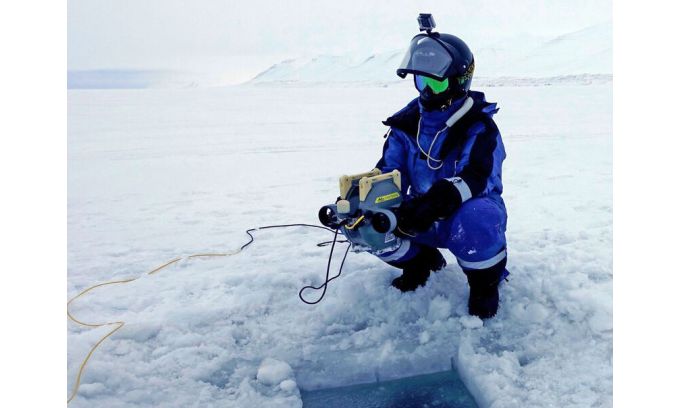
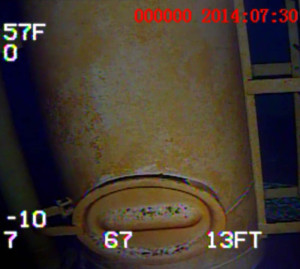
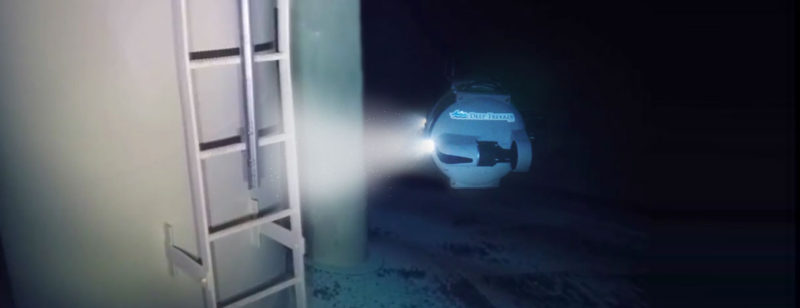
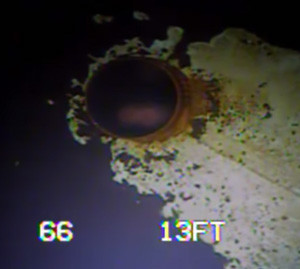
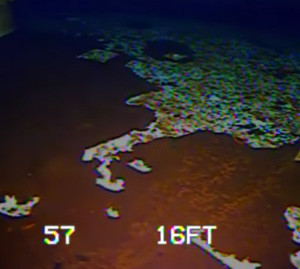
Underwater drones (ROVs) inspecting an underwater dam

All those managing dams, dykes and embankments understand the critical importance of regular (dam) inspections. There is growing concern about dam safety worldwide. Fewer new dams are being built and many existing dams are ageing and starting to show signs of wear.

Especially in the Netherlands and Belgium, the countries of water and water works, it is crucial to maintain dams (and dikes) properly. When they are in bad shape, the consequences can be disastrous. Fortunately, this does not happen often, but when something goes wrong it has major consequences, for everything in the immediate vicinity. This must be prevented, of course, through regular maintenance and inspections.

Dam inspections can cover many areas, but perhaps the most difficult to carry out are those which focus on the surface of the dam below the waterline. Underwater inspections are not only crucial for checking existing dam walls for cracks and signs of ageing, but they are also necessary during the construction of new dams.

Remotely Operated Vehicles (ROVs) are used for underwater inspections in various industries, and the offshore industry is becoming increasingly aware of their usefulness.

The REVOLUTION underwater drone is capable of operating at depths of up to 300 metres and can perform various tasks such as video and photo documentation. In addition, it has built-in sensors for water temperature, (auto)compass direction and (auto)depth. It also has a patented pitching system that provides accurate rotation and manoeuvrability up to 180 degrees for easy sideways movement.

Read more: hydroelectric dam inspection


DAMS, DIKES AND QUAYS

As countries with large coastal areas and many rivers and other waterways, it is important that the battle against water is not lost. Dams and sluices protect the inland areas from the water from rivers, and regulate water flow with great techniques. Some of these structures are used so much every year that they cannot be stopped. But on the other hand, because of this large use, it is important to keep the construction as good as possible, and to monitor it well.

When people think of dikes, they often think of the dikes along the coast and around rivers. However, these are the dikes on land, and there are also plenty of dikes in or on water (such as the Afsluitdijk). These also require a lot of maintenance due to the large flow and pressure of water and often also traffic. Because of the large impact the Afsluitdijk has on the economic and ecological area of the Netherlands, it has to be maintained well, and this can only be done through accurate data and continuous research.

Quays, come in all forms, shapes and sizes… From harbours to city canals. In Amsterdam, not everything is allowed over the quays for fear of collapsing. Earlier this year, a quay collapsed, with major consequences for traffic both on land and in the water. Inspections of quays can prevent situations like this, which would save a lot of money. But you don’t want to put people’s lives at risk in potentially unstable situations, do you?

Ingestorte kademuur Amsterdam werd vorige maand afgezet vanwege verzakking | NOS (Photo from NOS.nl)

ROVS (DRONES) OR DIVERS? INTEGRATE, NOT REPLACE!?

Not everyone is convinced that underwater drones and underwater robots are the way of the future. However, underwater inspections require both ROVs and divers for safe, efficient and cost-effective offshore inspections. Currently, dive safety requirements stipulate that there must be three qualified divers for each dive, plus supervisors on the surface. It is therefore very expensive to maintain a diving team.

ROVs can and should be used with the divers to visually indicate the underwater structure. ROVs are particularly useful when the depth is greater and the safety of the divers may be compromised. Deep Trekker ROVs can operate for up to 8 hours underwater using on-board batteries. It is small enough to be transported to dive sites and does not require a large team to operate. In this respect, an ROV is more cost-effective.

When divers are needed in the water for repairs or inspections, underwater drones provide security by being an extra set of eyes in the water for the safety, security and guidance of divers.

“We were able to save valuable dive time by using an underwater drone to pinpoint the exact locations we wanted to focus on.” – Frank Hauser

Whether companies want to embark on the advances in underwater inspections remains to be seen. One thing is clear, however: ROVs are not meant to replace divers, but to reduce the risks of their profession. H2O drones believes that the use of an underwater drone (ROV) in combination with divers makes it possible to carry out inspections better, faster and more effectively – in terms of safety, efficiency and affordability.

Click here if you want to know more about the diversity of our drones, and in what situation you can use one!


Looking for expertise or advice? Contact us, or visit one of our social media pages: Facebook and LinkedIn.


What are the benefits of using a ROV for (drink)water tanks?

How can the drone / robot best be used?

Tank inspection is necessary for structurally healthy, clean and safe water tanks. Without inspections, problems can quickly arise, including sludge in the tank. This jeopardises the integrity and cleanliness of the tank.

There are already standards for the inspection of water tanks, in different categories. Basically, it comes down to the following:

  • Draining and inspecting a water tank
  • Wet inspection of a water tank

Both must be carried out periodically. The wet inspection used to be done with divers, but nowadays it can be done in a different way.

H2O Drones offers advanced remotely operated vehicles (ROVs) to change the world of water tank inspections. The drones are proving themselves as a valuable tool for safe, accurate, clean and convenient tank inspections. Why is this so? Read on and see why underwater drones are essential for tank inspections.

See here how it is done:


TUNING ROV ENGINES YOURSELF!

Tank inspections can vary greatly and users may require small, precise movements and large, sweeping movements in the same inspection. Adjusting the gain control will increase or decrease the speed and steering sensitivity of the ROV, allowing operators to maximise control. The gain control can be adjusted using the two sets of arrows in the centre of the controller. Set the gain as low as 1 or as high as 12 (10%-120% power) to easily make small, precise manoeuvres or large, extended passes.


STABLE CAMERA CONTROL ON THE UNDERWATER DRONE:

With Deep Trekker’s innovative BRIDGE technology, underwater drones provide automated control and stability for operators, allowing them to keep the camera focused on the inspection. Easily perform vertical inspections of walls by rotating the camera while keeping the ROV in place. The 270-degree camera rotation also allows operators to quickly and easily inspect ceilings, floors and walls.


DOES NOT AFFECT WATER QUALITY:

When inspecting water tanks, towers and other water storage facilities, it is important to keep the water clean. One of the main advantages of using an underwater robot for inspection purposes is that they do not introduce contaminants into the water as a diver might. Prior to entering the tank, underwater drones can be fully sanitised with a chlorine solution without any negative effects on the ROV itself. Keep the water tanks clean and free from contamination!


LASER SCALER ACCESSORY

The laser accessory is a useful tool for understanding the size of objects or potential errors. It emits two laser beams 25mm away from the camera. The operator can then map objects, cracks or rust spots from up to 2 metres away. The lasers follow the camera as it rotates, so the beams can be viewed on the screen at all times. With these lasers, the operators can make a more accurate estimate of the size of objects in order to make a proper analysis for a follow-up plan.

PHOTO AND VIDEO DOCUMENTATION

In addition to providing live underwater images, the underwater drones can allow users to record both photos and videos during inspections. This content can be further enhanced with voice notes or titles to properly archive and present the inspections to clients. Data can be transmitted immediately and stored for analysis, where raw data can be converted to useful information. Recorded content is also useful for training and internal review processes.

H2O Drones also offers tank cleaning tools in the Netherlands, Belgium and Germany from Deep Trekker. These are designed to enable thorough and efficient cleaning without taking tanks out of service. See the DT640 Utility Crawler with vacuum and high pressure cleaning options.


Would you like to know more about tank inspections and the possibilities of an underwater drone for your company? We are available 24/7 on e-mail (info@h2o-drones.com), Facebook and LinkedIn and will answer your question as soon as possible!


How ROVs optimise search and rescue budgeting…

Remote controlled underwater drones or ROVs) provide search and rescue teams with a safe and effective tool for searching and recovering victims and evidence.

Typically, search and recovery teams have limited budgets to carry out incredibly complex and difficult work. The use of an underwater robot allows teams to make the most of the budget they have to carry out operations.

To explain this, here are some true stories where the use of an underwater drone really helped!

There are some true stories here, where we don’t always have the subtleness read… at your own risk.


OUR UNDERWATERDRONES AND ROBOTS:

An underwater drone is a highly manoeuvrable underwater vehicle equipped with a camera to provide operators with a live view of the underwater environment. Intelligent and easy-to-use ROVs are durable and portable solutions for underwater inspections.

The DTG3 is a mini observation class underwater robot built to allow operators to quickly deploy and visually inspect below the water’s edge. Equipped with an internal, rotating full-hd camera, the unit can maintain position in the water while rotating 270° above and below water. Using expert engineering and the help of gravity, the ROV shell and propellers can be rotated while gravity holds the internal semi-circle-weighted frame down. This allows the ROV to ride straight up and down, forward and backward, while using the same propellers for thrust.

The REVOLUTION is a completely redesigned underwater drone. This mission-ready ROV offers a larger payload, can dive deeper and has advanced stabilisation. Rotating the head allows operators to rotate the camera, manipulators and sonar 260° while in moving water. The 6 propellers provide side-to-side movement of the camera and accurate rotation forward and backward, providing maximum control and an advanced stability posture.

Both vehicles operate with BRIDGE-technology from Deep Trekker. The BRIDGE offers enhanced operational capabilities with a technology platform and provides simplified control and constant communication for optimal usage of your drone.


USAGE OF DIVERS:

The use of an underwaterdrone allows teams to minimise their used budget by keeping divers safe, and to use an ROV in difficult or challenging situations. In addition, divers can be spared for situations where they are absolutely necessary, allowing the ROV to handle more mundane tasks.

Search and rescue missions can be dangerous and time consuming for divers, making an underwater drone or robot an incredibly useful tool for teams. Working alongside divers, ROVs provide immediate eyes in the water to assist in many facets of recovery and salvage, from the rapid identification of targets to retrieving items from dangerous locations.

Shane Seagroves, Director of Emergency Services in Lee County, NC noted one specific instance where an underwater drone kept divers out of the water. “You take the ROV and you can find your target on the bottom pretty easily,” Seagroves noted. “We identify the target with the boat, so we use the ROV instead of having to hop with the divers. We deploy the ROV from the boat and check the target.”

When using the ROV, this means the divers do not have to spend too much time identifying the targets.

Seagroves stressed that divers still have a place to search and rescue and that the use of ROVs is not about replacing divers, but about keeping divers safer. “A lot of the divers are hesitant to ask us to come out because they thought we were trying to take them out and it’s never been for that. It’s always to make it safer for everyone out there.”

Maine State Police Special Agent Glenn Lang echoes Seagroves’ statement, “You don’t replace them, it makes them safer and it protects the lives of the divers because it can be so dangerous to go under the ice…. 25 years ago I lost one of my friends diving under the ice, it’s just so risky losing divers that way is just unacceptable when you can put an ROV underwater.”

Using an underwater drone in search and rescue missions allows divers to stay safe and out of treacherous situations. In addition, the ROV can provide assistance to divers so they can complete their missions in a timely manner and reduce the time underwater.

“It’s all about safety for us,” Seagroves shared. “Safety for our divers, and speeding up the process.”

DEPLOYMENT TIME:

The use of ROVs allows teams to minimise the time required for search and recovery. By using the ROV for target search and identification, teams can quickly find victims and evidence.

During the ‘rescue’ of Kelsey Starling, Ashton Davis, Houston County Search and Rescue Chief and Board President, noted that using “the camera rotation feature as opposed to driving and risking entanglement” was incredibly helpful. In addition, the depth of the search area is often more than 70 metres; meaning the divers would have to decompress for almost three hours to search for 45 minutes. The DTG3 was able to dive all day, reducing the risk and maximising the search time for Kelsey.

Davis noted that the use of an ROV was essential throughout the search process. Maximising both the safety and efficiency of the diver allowed the team to conduct the search in the best possible way. “It will definitely be one of the tools in our toolbox,” Davis said.

Seagroves shared a comparison of two searches, one using an underwater drone and one using towing procedures. “There were two drownings, 30 miles apart, within two days. They called me to go to the first one. My first passage with the boat I got a good view pulled the ROV down and checked the target, attached the ROV to his swimwear. The diver entered the water, followed the tether down and the victim was in a body bag and back in the boat, literally no more than 15 minutes after the diver first entered the water surface.

That is a success. You cut yourself off from the family, you drop the risk factor for the divers and you don’t keep people in the water all day. On the second drowning, we weren’t called to go up…they were on the 6 o’clock evening news via a helicopter flying over them and they were towing in the bay…that was a 24-30 hour salvage on a victim lying in a bay. Our salvage was less than an hour, they were there for 30 hours.”

Salvage can also be made faster and safer by using an ROV to assist divers. Ashton Davis of Houston County Rescue also uses their ROV to make salvage quick and safe. In the Kelsey Starling case, the team intentionally wrapped the DTG3 around the nearest tree to use as their dive guide line. Davis noted that, “having a tether really helps.”

Seagroves uses the ROV in a similar way to make recovery faster and safer for the divers. “We attach the ROV to the target and let the diver go down and do the salvaging,” Seagroves explained.

“By far the best piece of equipment other than divers is this ROV,” Davis shared, adding that the work possible with both human divers and an ROV makes for an ideal search and recovery team. The battery life allows for long searches in deep and potentially dangerous waters without tiring divers unnecessarily, while the advanced camera search provides quality visibility in waters with varying visibility.

By speeding up search and recovery operations, teams are able to save money and time.


VERSATILITY:

The portability and durability of the drones allow teams to make the most of their vehicle’s versatility. Lang has managed to get creative with his ROV to retrieve sunken vehicles.

On February 1, on Crawford Pond in Warren, Maine, two quad riders unfortunately drove into open water in a dangerous area. Safely and efficiently rescued by the Knox County Sheriff’s Department and the Maine Warden Service, both riders were unharmed, but the quads were lost underwater.

Covering an area of 2.4 square kilometres with a maximum depth of 19 metres, Crawford Pond is a difficult place to find a sunken quad bike. Police had a flat-bottomed dinghy to retrieve the quad, but actually finding the sunken vehicle would require more than that.

Plaatsbepaling-GPS-USBL

Instead of sending in a diver in dangerous conditions to confirm the vehicle’s location, the team opted to send in the DTG3. Using the underwater robot’s 4k camera, Lang was able to locate the quad within half an hour.

After the location of the quad was confirmed by the underwater drone, the DTG3 was used to tie a tow rope to the sunken vehicle so that it could be pulled out of the water. Without the ROV, the time and resources required to actually locate the quad would have been much greater.


THE DIFFERENCE A DRONE CAN MAKE

The machine was fantastic, I love my machine and I got a great price for it. The support is out of this world,” Lang shared, a sentiment echoed by Seagroves. “Our ROV has paid for itself on initial recovery,” Seagroves said.

“It’s not just our operations, it’s more of a regional asset for the state of North Carolina. It has sped up the process by which we find evidence, it has increased the safety factor because we don’t have to have as many divers in the water as before. When you can use something mechanical or electronic to make it safer for our responders, it’s definitely a great asset to what we’re trying to do,” Seagroves shared.

For more information, please go to the product range to see what we can offer you.

We also have several pages on social media, including Facebook and Linkedin so that you can always keep up to date with developments in our company.

Even a diving teams can be optimised with ROVs!

Underwater drones and underwater robots (ROVs) are suitable and versatile tools that can be used to relieve commercial diving teams and make their work safer. For example, the underwater drone can be very helpful in performing inspections in confined spaces, including tanks, pipes and inlet structures, but also in open water applications, such as hull inspections or salvage operations or bottom scans.

Underwater drones and commercial divers really are the best team for performing underwater tasks. Combining the strengths of both divers and underwater drones creates a rock-solid team.

Commercial divers play a major role in everything that happens underwater in infrastructure, ecology, the maritime world and salvage operations. Whenever something leaks, crashes, sinks or catches fire in the maritime world, commercial salvage teams, for example, are called in to prevent and resolve problems. Without divers, underwater incidents can have serious detrimental effects on the surrounding ecosystems and even human health.

In addition, many underwater inspections are carried out by commercial divers. A lot of objects, read Assets, are in the water and need to be inspected periodically to get a grip on the asset management process. and what about all those water related assets that our industry has? Think of water tanks for fire extinguishing systems, think of the installations that are used to bring our drinking water to us, or think of nuclear reactors where the cooling water system plays an important role.

All assets that must be periodically tested or inspected to guarantee the safety of the installations.

So there is a lot of work to be done by divers. Unfortunately, this work all too often leads to dangerous situations in which divers are in danger of losing their lives. By deploying an underwater drone, underwater robot or ROV, we remove or even eliminate a significant part of these dangers.


Here is a video of the Revolution in action!

1. PRE DIVE CHECK – Last minute Risk Analysis (LMRA)

Diving is always dangerous, no matter what the situation. Human safety is paramount in any mission or situation. Before sending a human underwater, an underwater drone , underwater robot or ROV can perform a safety survey to ensure that the underwater environment is safe for a diver.

With the help of the underwater drone , underwater robot or ROV, the underwater working environment can be accurately and efficiently checked for risks that could endanger the professional diver. Risks are identified using the Last Minute Risk Analysis (LMRA). Based on the identification, management measures are taken to remove the risks so that the diver can do his or her job safely.

In addition, the LMRA provides users with an assessment of the general situation as a check beforehand. Work in spaces that are difficult or unsafe to access can even be carried out entirely by the underwater drone, underwater robot or ROV.  Divers will also be able to orient themselves better before entering the water.

The entire team within the operation benefits from the deployment of the underwater drone, underwater robot or ROV. This benefits the final project result! DeepTrekker’s battery powered and easily deployable underwater drone , underwater robot or ROV are quick and easy to use – providing dive teams with a reliable way to ensure the safety of their mission.


2. Costs control and safety measurements.

An LMRA or pre-check with an underwater drone, underwater robot or ROV enables the diving team to fully investigate and prepare for the upcoming mission in advance. Before a diver even dips a toe into the water, the ROV can be used to identify the area to be explored. By deploying the underwater drone, underwater robot or ROV, the diving team is able to prepare and plan adequately.

Now that risks are identified in advance, project costs can be controlled considerably better and safety is guaranteed!

3. DIVE MONITORING

Diver safety can also be optimised during the dive using an underwater drone, underwater robot or ROV. By monitoring divers from above, operators can ensure the safety and security of divers. The operator provides visual support and can instruct the diver live video observation allows for immediate detection of any problems with immediate emergency response if required. Whether in open water or confined spaces, live monitoring is incredibly beneficial to the safety of diving.

4. EVALUATION AFTER THE DIVE

Operating an underwater robot from the top also makes it possible to accurately record the dive for later review. Recording underwater diving operations in 4K UHD provides value to both the divers and their customers.

Commercial diving companies can show the video to their customers to demonstrate their valuable and important work. Recorded video also provides concrete evidence of the work performed, work that can otherwise be difficult to demonstrate. Add value to your business by providing high quality service reports.

Divers can also evaluate dives to determine where work and efficiency can be improved to maximise their work performance. Recorded videos can be used for training purposes at both dive centres and commercial diving companies to demonstrate specific diving procedures to students.

Companies can also use recorded video from the underwater drone to create a historical record of dive content for marketing, documentation and assessment purposes.

Discover the DTG3

Underwaterdrones- and robots:

We from H2O-drones are the exclusive reseller of Deep Trekker in the Netherlands and Belgium! So we offer the drones, robots and accessories of Deep Trekker, as well as service and expertise in your area.

DeepTrekker has two underwater ROV models: the DTG3 and the REVOLUTION. The DeepTrekker ROVs are designed for maximum portability and manoeuvrability. The compact size and onboard battery allow access to remote and confined locations.


For questions and comments you can visit us at our social media pages: Facebook and LinkedInOr contact us directly here.


Ship inspection with an ROV. Fast and effective!

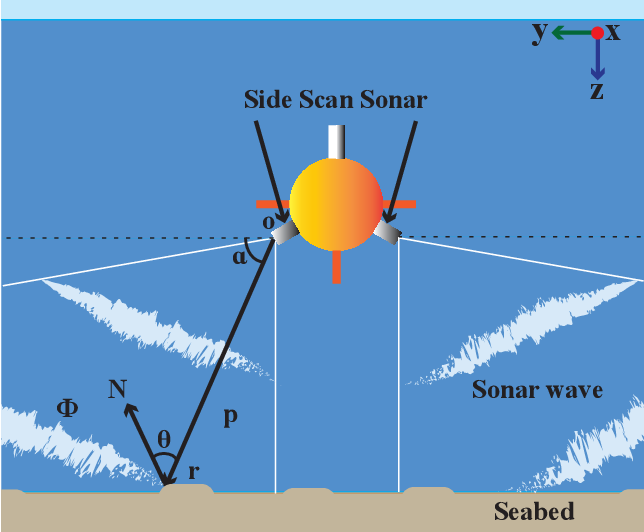
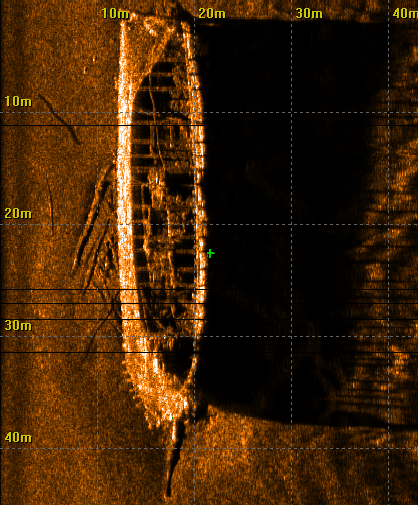
Use an underwater drone for your ship inspection. No longer dependent on professional divers and shipyards for propeller, rudder or surface inspections. The Subsea Drone Revolution ROV, equipped with the Imaging Sonar of Blueprint Subsea is very suitable for carrying out ship inspections while the ship is still in the water. With the imaging sonar, the entire ship under water is visualised. We are working with a forward looking sonar. With the help of the rotating head, images can be taken from all sides of the boat. This allows for a precise picture. However, the drones are also equipped with a camera. The 4k video camera, clear under water images are made that provide direct insight into the condition of the ship under water without the ship having to be taken to a shipyard or to a dry dock.

onderwaterdrone kopen

The ship does not have to be taken out of service. By performing wet inspections below the waterline with an ROV, the ship owner saves a lot of money. Inspection of the propeller, rudder or bottom, it was never so easy!


Are you interested in a ship inspection but are not sure if the drones can help you? We offer free demonstrations, just contact us here. We also have a LinkedIn page to keep you updated about our developments of the drones.