The debate surrounding the security of our offshore infrastructure has intensified significantly in recent times. The North Sea is a dense network of cables, pipelines and wind farms, and geopolitical tensions make it clear that these systems are vulnerable to sabotage. But whilst attention is focused primarily on the sea, another vulnerability remains strikingly overlooked: the security of our onshore water infrastructure.
Locks, dykes, weirs and pumping stations form the backbone of our protection against flooding. They are built to withstand extreme natural forces, but are not always designed with modern threats in mind. It is precisely below the waterline that a risk arises, because there is less visibility, less control and often less frequent inspections.
Why underwater parts of waterworks are particularly vulnerable
Anyone considering onshore safety soon realises that the underwater part of our infrastructure forms a sort of shadow world. It is an environment where damage, wear and tear, or even suspicious situations can easily go unnoticed. Divers cannot reach every area; inspections depend on conditions and are often scheduled to fit in with maintenance routines. As a result, there is a time lag between a problem arising and the moment it is discovered.
At a time when malicious actors are becoming increasingly creative, this is a risk we cannot ignore. A damaged sheet pile wall, a undermined lock gate or an object deliberately left in a vulnerable spot can have serious consequences. Not only for water safety, but also for the economy and the quality of life in the areas behind the defences.
How underwater drones make a difference
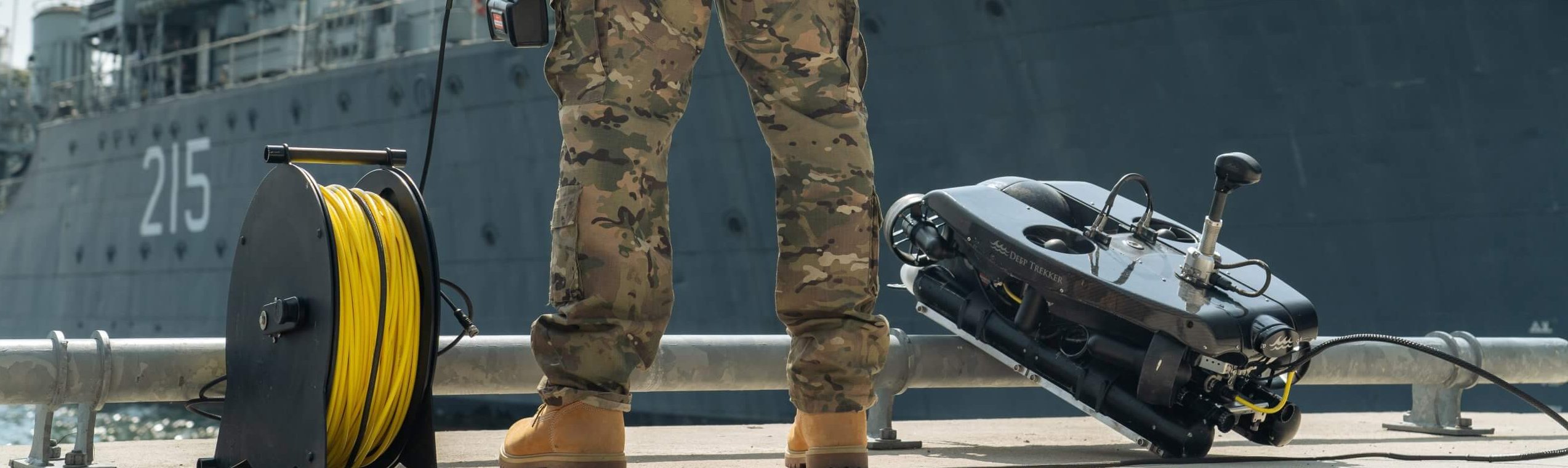
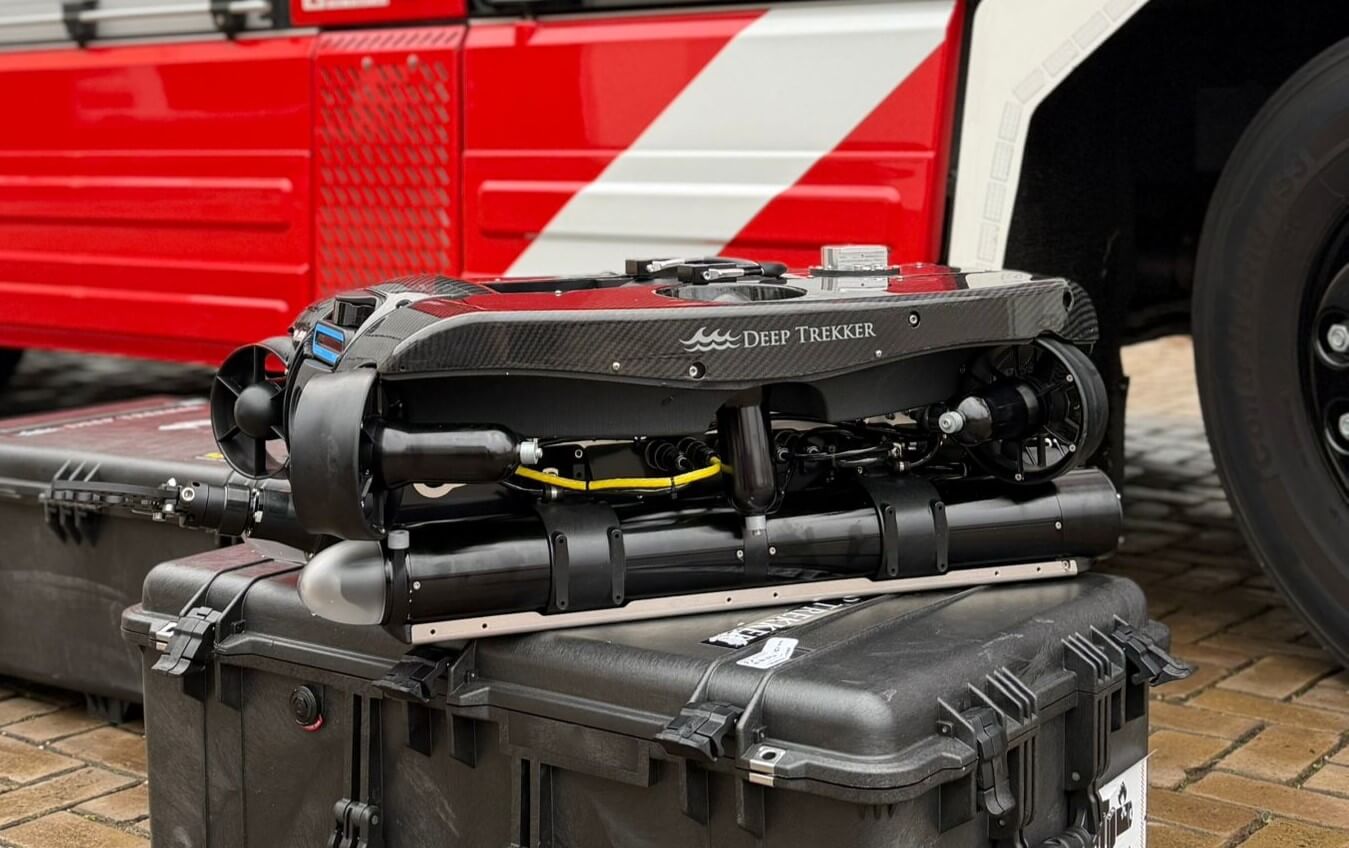
Underwater drones offer a way to reduce this blind spot. They provide visibility in places where there are normally no eyes. A drone can be in the water within a few minutes of arriving on site. This makes it possible to quickly assess the situation, whether it involves a technical fault, damage or a situation that requires further investigation.
In addition, underwater drones make it possible to carry out inspections much more frequently. Whereas inspections used to be mainly scheduled, they can now take place whenever necessary, without entailing additional risks or high costs. As a result, subtle changes are detected sooner. A small crack that is slowly growing, a subsidence that is developing, or an object that wasn’t there yesterday: underwater drones provide the insight before it becomes a problem, thanks to the monitoring of the asset underwater.
Another advantage is that underwater drones can provide a form of continuous monitoring of onshore flood defences. By regularly returning to the same locations and inspecting them, a baseline is established. Any deviation from this becomes apparent more quickly. This makes it easier to determine whether the issue is due to natural wear and tear or something that may indicate sabotage or deliberate tampering.
From reactive to proactive water management
The use of underwater drones is changing the way organisations view water safety. Whereas inspections used to focus primarily on maintenance, the focus is now shifting towards safety and resilience. Underwater drones help to respond more quickly, monitor more effectively and understand what is happening sooner. This creates a form of proactive water management that is suited to the challenges of our time.
Discussing this topic requires care. No one benefits from fear or speculation. But ignoring vulnerabilities is of no help either. The Netherlands is a country of water, and our safety depends on infrastructure that is, in part, decades old and much of which lies underwater. That is precisely why it is wise to invest in technology that helps us see better what is happening in places where we are normally blind.
Taking the pressure off through innovation
Underwater drones are not a panacea, but they are an essential tool in a modern onshore safety strategy. They enable operators to respond more quickly, monitor more effectively and understand what is happening sooner. We are seeing more and more organisations taking this step and the market for underwater drones in the Netherlands is growing. Not because they have to, but because it is sensible and ultimately helps to take the pressure off the sector.
Onshore safety deserves the same attention as offshore safety. Perhaps even more, because the consequences of failure have a direct impact on our villages, towns and economy. By investing in underwater visibility, we strengthen the protection of the waterworks that keep our country dry.