War often does not end the moment the last fighting ceases. Beneath the water’s surface, its consequences can remain visible and dangerous for years to come. Sea mines, unexploded ordnance, damaged bridges, quays, harbours and underwater structures pose a threat to the safety, economy and reconstruction of affected areas. It is precisely at this stage that underwater drones are playing an increasingly important role.
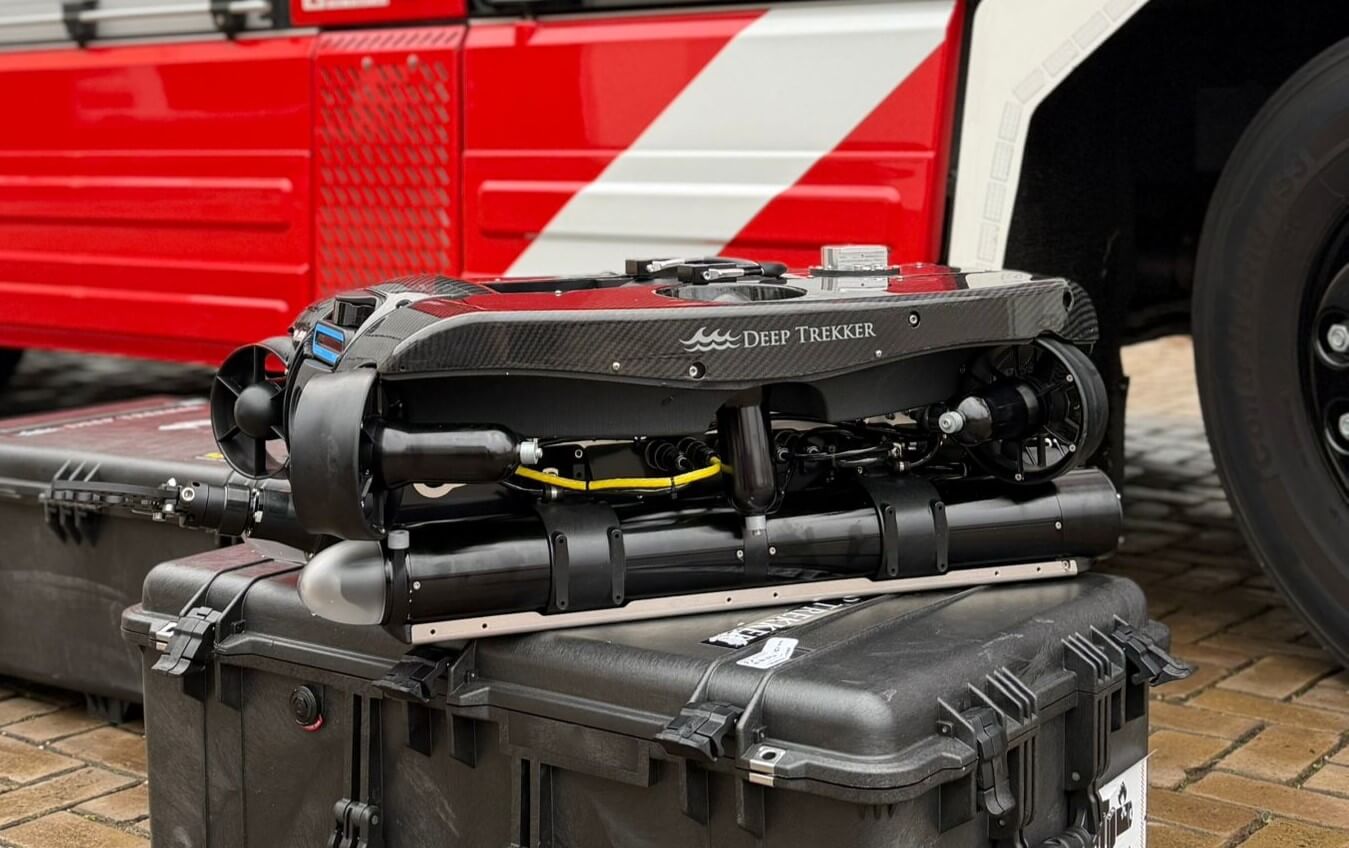
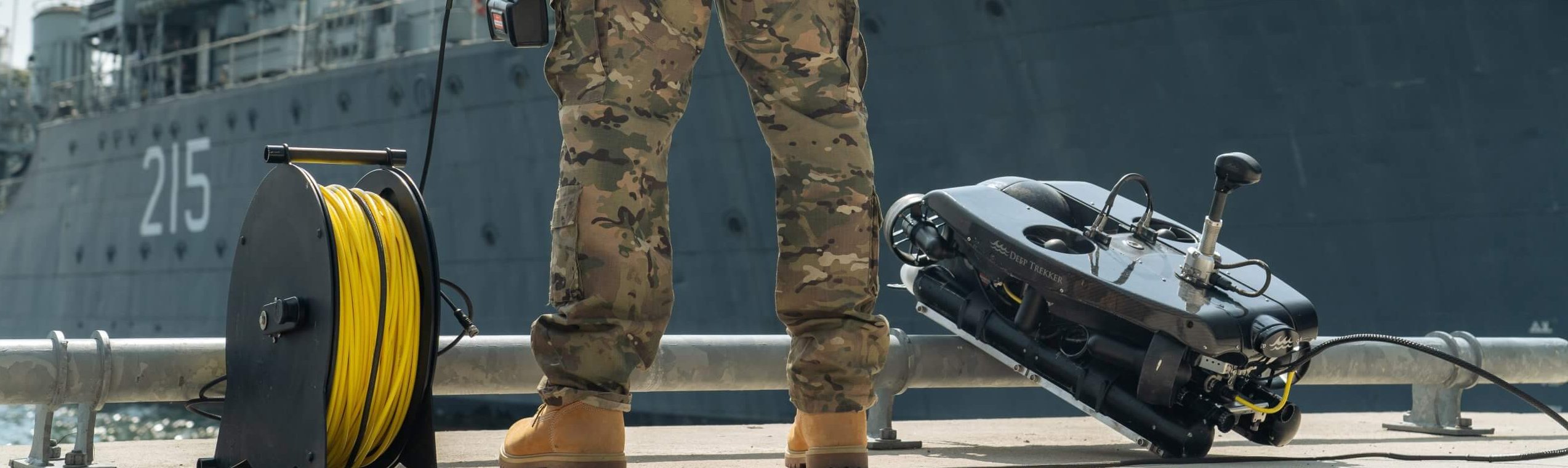
At H2O Drones, we are seeing how modern ROVs (Remotely Operated Vehicles) are becoming indispensable tools for organisations responsible for safety, infrastructure and recovery operations. Thanks to advanced sonar, camera and inspection technology, areas can be surveyed without divers or explosives experts having to take unnecessary risks.
The hidden danger beneath the water
In virtually every maritime conflict, sea mines and other explosives are deployed to block off ports, coastal areas and key waterways. Although some of this ordnance is detonated during a conflict, a significant number of explosives remain on the seabed, in rivers and in harbours. Some of these objects remain there even decades later. According to Deep Trekker, our partner in ROVs, large numbers of unexploded maritime explosives are still present worldwide in waters that were used during historical conflicts.
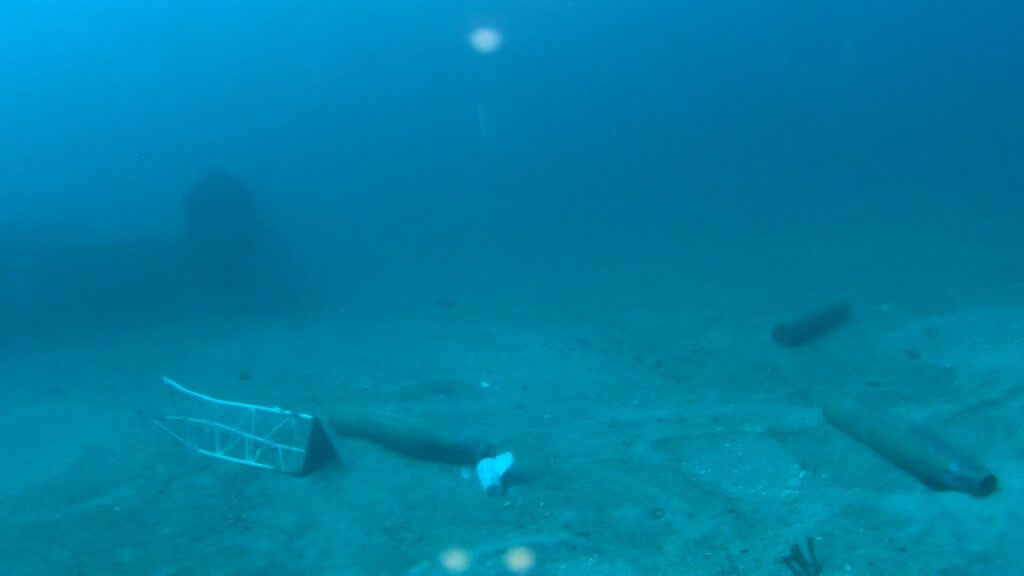
Before a port can become fully operational again, shipping can resume safely or restoration work can begin, these risks must first be identified. Traditionally, this meant that specialist divers had to carry out surveys in potentially hazardous areas. This is not only time-consuming, but also entails significant safety risks.
First the drone, then the specialist
Just as with search and rescue operations, information is crucial in mine clearance work. The better the situation is assessed in advance, the safer the operation will be.
Underwater drones make it possible to inspect suspicious objects remotely first. Using high-resolution cameras and imaging sonar, operators can approach, classify and document an object without people having to enter the water immediately. This provides a clear picture of the situation before explosive ordnance disposal (EOD) services or military EOD teams take further action.
Deep Trekker describes how modern ROV systems are used to detect, identify and re-locate mine-like objects on the seabed. Real-time video footage and sonar data prove invaluable in reducing uncertainties during inspections.
The result is an operation in which fewer people are directly exposed to risks and in which decisions are based on up-to-date and reliable information.
Sonar makes invisible threats visible
One of the biggest challenges in mine clearance is the limited visibility underwater. Ports, estuaries and coastal waters often contain large amounts of suspended sediment, which means that traditional cameras are of limited use.
That is why sonar is an essential component of professional underwater drones. Sonar works using sound waves and can detect objects that are completely invisible to the human eye. This enables operators to systematically scan the seabed and identify anomalies that require further investigation. H2O Drones has optimised this technology so that infrastructure is clearly visible and foreign materials on the seabed are easily detectable.

Moderne Deep Trekker-systemen combineren sonar met videobeelden, waardoor operators zowel een akoestisch als visueel beeld van de omgeving krijgen. Dat vergroot de kans op een correcte identificatie en maakt het eenvoudiger om onderscheid te maken tussen bijvoorbeeld een stuk puin en een potentieel explosief object.
Reconstruction begins after the war
Once explosives have been cleared, the next challenge often arises: assessing damaged infrastructure.
Bridges, quay walls, locks, harbours and underwater foundations can sustain significant damage during a conflict. This damage is often located precisely in places that are difficult for inspectors to reach. At the same time, a rapid assessment is essential to get transport, logistics and economic activities back on track.
This is where underwater drones once again offer a significant advantage. Instead of deploying divers straight away, inspections can be carried out quickly and safely from the water’s edge or from a vessel. Thanks to high-quality cameras, powerful lighting and advanced navigation systems, structures can be examined in detail without the infrastructure having to be taken out of service.
Detailed inspections for better decision-making
Recovery projects are all about reliable data. Engineers and asset managers want to know exactly where damage is located and how severe it is before repair work is carried out.
Deep Trekker has therefore developed its systems to collect high-quality inspection data. Modern ROVs can not only film underwater structures, but also capture them for 3D modelling and photogrammetry. This creates a digital model of a structure in which wear, cracks, corrosion or impacts are made visible.
For organisations responsible for the reconstruction of ports, bridges or defence-related infrastructure, this means that inspections can be carried out more accurately and repairs can be planned more effectively.
Safety remains the key benefit
Although the technological capabilities are impressive, safety remains the main reason for deploying underwater drones. Whether in mine clearance operations or inspections of damaged infrastructure, any task that can be carried out remotely reduces the risk to personnel.
Deep Trekker emphasises that ROVs have been developed specifically for challenging and potentially hazardous environments to support professionals in inspection, security and reconnaissance missions. Thanks to their manoeuvrability, real-time imaging and rapid deployment, crucial decisions can be made without exposing people directly to danger.
A technology that goes beyond inspection
The use of underwater drones in mine clearance and reconstruction demonstrates just how wide-ranging the possibilities of this technology have now become. Whilst ROVs were once primarily seen as tools for inspection, they are increasingly evolving into essential systems for security, defence and recovery operations.
At H2O Drones, we believe that underwater robots make a significant contribution to a safer world. Whether it involves locating explosives on the seabed, inspecting damaged harbours or assessing critical infrastructure following a conflict, the power of an underwater drone ultimately lies in one simple principle: first gaining insight, so that people can carry out their work more safely and with greater awareness.