Drinking water companies face a complex challenge. Infrastructure is aging, maintenance budgets are under pressure, and demand for clean drinking water is rising rapidly. At the same time, asset managers need to understand the actual condition of reservoirs, pipelines, chambers, and other critical parts of the network. But how do you inspect underwater assets without taking installations out of service?
More and more drinking water companies are using Remotely Operated Vehicles (ROVs) for this purpose. These underwater drones enable visual inspections without draining reservoirs or pipelines. This provides an accurate picture of asset condition and prevents unnecessary disruption to operations.
A Broadly Applicable Inspection Technology
Within the drinking water sector, many assets are difficult to access using traditional inspection methods. With ROVs, inspectors can examine and document these objects underwater in high image quality.
Examples include drinking water reservoirs, where the condition of walls, floors, and structures can be assessed. In clean water and treated water chambers, deposits, cracking, or damage can be identified. Transmission and distribution pipelines can be checked for contamination, wear, and other defects that may affect network reliability. Pump chambers, pump shafts, intake structures, and underground connection structures can also be inspected effectively.
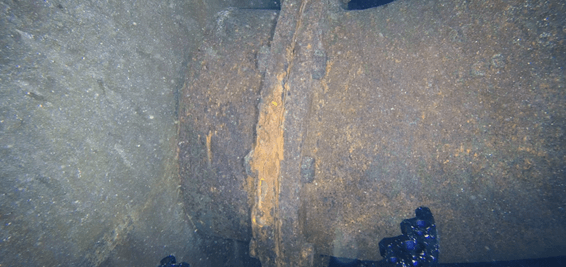
An inspection of a drinking water reservoir as shown above can provide insight into the condition of a coating layer, while a pipeline inspection focuses on detecting deposits or localized damage. This creates a more complete picture of asset condition than relying solely on age or maintenance history.
The Right Technology for Every Inspection
Drinking water environments are often characterized by clear water. As a result, inspections can frequently be completed using cameras and lighting alone.
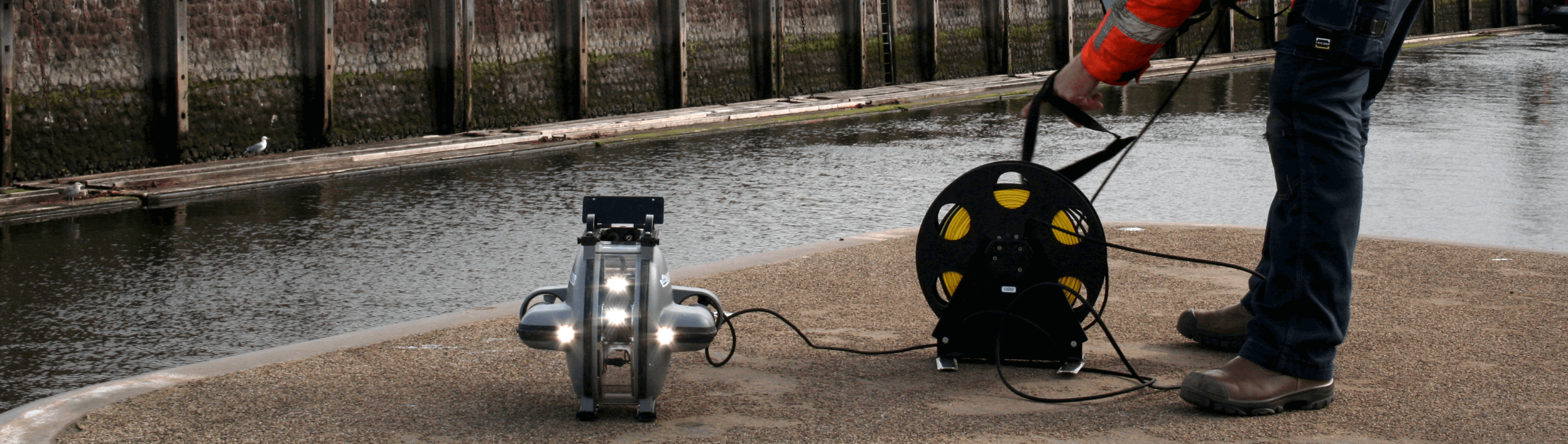
For smaller spaces and hard-to-reach locations, the Photon and DTG3 from Deep Trekker provide a solution. Thanks to their compact size, these underwater drones can be deployed in drinking water chambers, reservoirs, and other locations where space is limited.
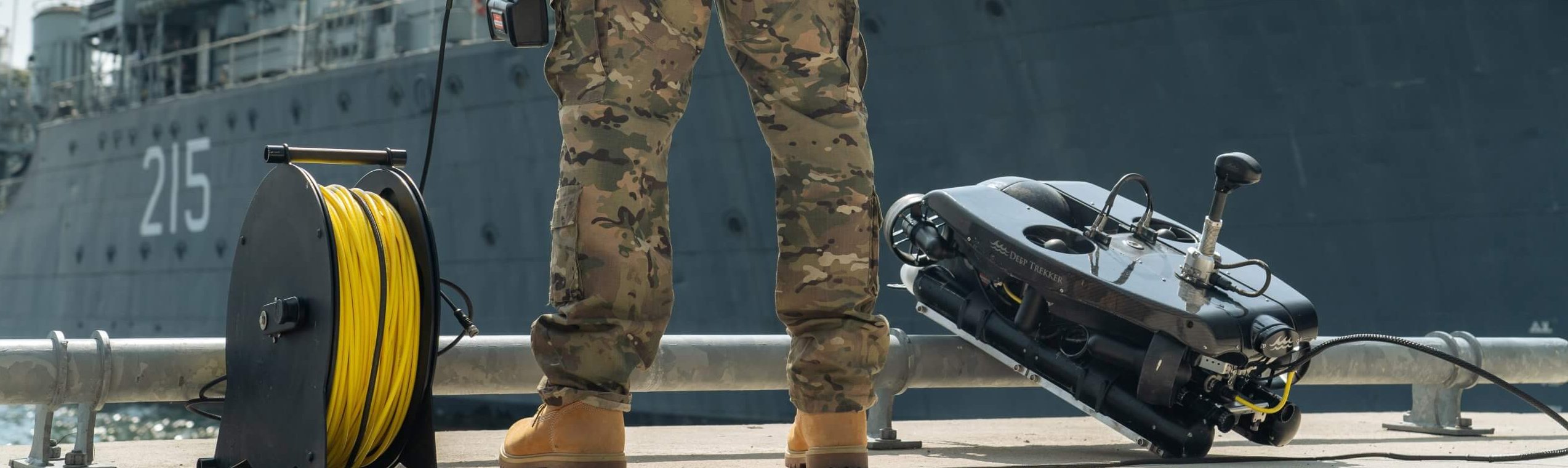
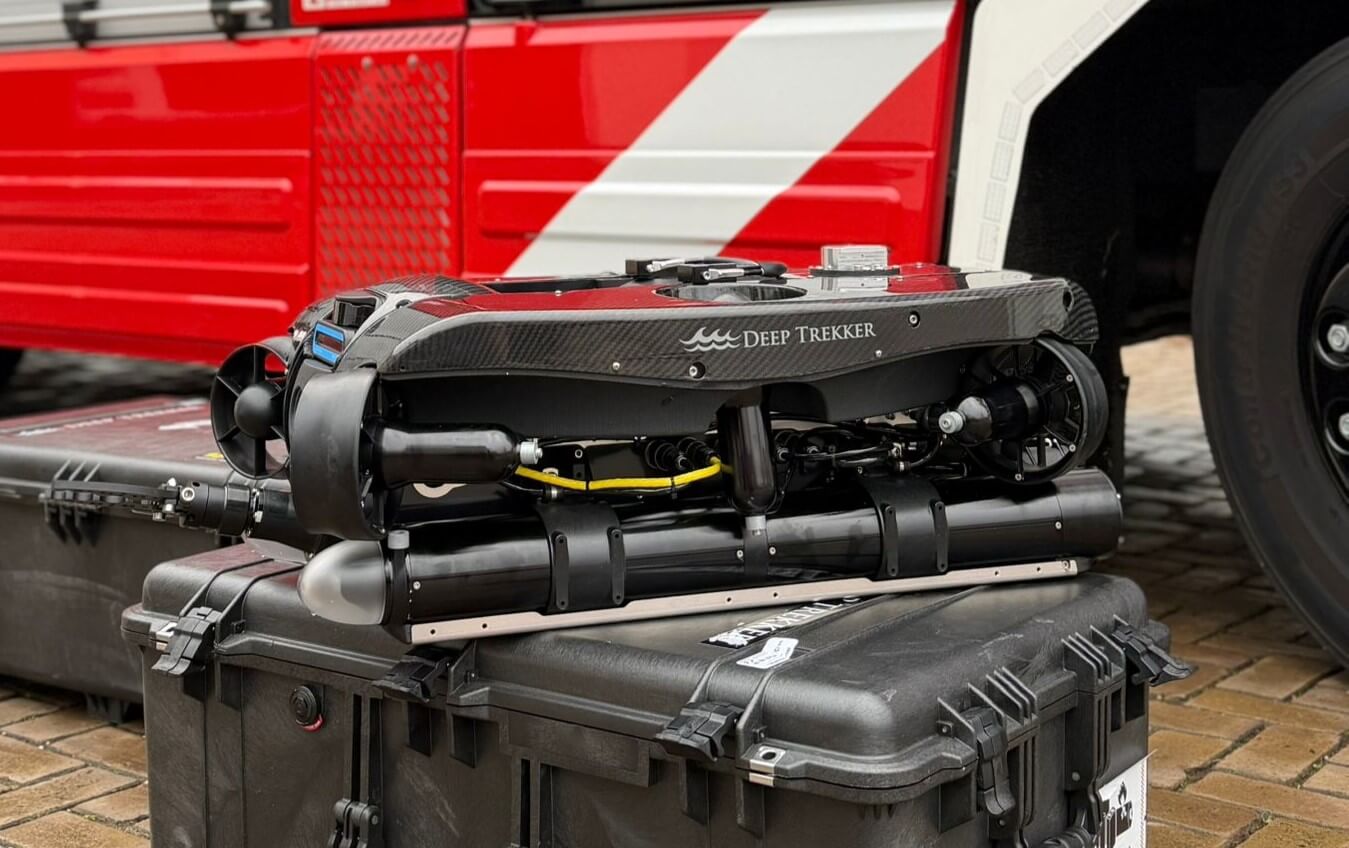
When inspectors need to maneuver around structures, pipelines, valves, or other installation components, the Revolution ROV can also be deployed. Thanks to its six independent thrusters, the system can maintain precise positioning and stable hovering during inspections. This makes the Revolution suitable for pump chambers, pump shafts, intake works, and other complex structures within drinking water facilities.
Not every inspection requires a freely moving underwater drone. For long-distance pipeline inspections, crawlers can be an effective addition. These systems move through pipelines in a controlled manner and capture the interior condition of the pipeline route. Deposits, damage, joints, cracks, and other defects can be documented without taking large sections of the network out of service.
By combining ROVs and crawlers, a solution is created for virtually the entire drinking water infrastructure. Reservoirs, chambers, pumping systems, intake structures, and pipeline networks can all be inspected using the most suitable technology.
Inspecting More Sustainably
Traditional inspection methods often require reservoirs or other installations to be drained temporarily. This results in costs, time investment, and water loss. Additional work is also required to clean, secure, and recommission the installation.
With an ROV, the asset remains filled during inspection. No treated drinking water is lost, and operational impact remains limited. For drinking water companies, this represents an important step toward more efficient and sustainable asset management.
The Next Step in Drinking Water Inspection
For drinking water companies, it is becoming increasingly important to monitor assets accurately without placing unnecessary strain on operations. Underwater drones such as the Photon, DTG3, and Revolution, combined with crawler technology for pipeline inspections, make this possible. They provide access to locations that are traditionally difficult to inspect and deliver the information needed to make informed decisions regarding maintenance, renovation, and replacement.
As a result, inspection is shifting from a periodic control activity to an essential instrument for future-proof asset management in the drinking water sector.
Who Are We?
What distinguishes H2O Drones is the unique combination of technology, practical experience, and hydraulic engineering expertise.
With more than one hundred years of combined hydraulic engineering knowledge, H2O Drones was the first company in the Netherlands to perform large-scale underwater inspections using underwater drones. In addition, we pioneered the integration of ROV technology and professional divers within a single approach.
Our ROV operators are often active or former professional divers themselves. This means they not only understand how to perform an inspection technically, but also where critical defects, degradation mechanisms, and risks occur in practice. The result is more efficient inspections and higher-quality data collection. Based on this practical expertise, we continuously develop new inspection methods, sensors, and innovations tailored directly to field challenges.
Thanks to our work throughout the Netherlands and long-term cooperation with governments, water authorities, contractors, and Rijkswaterstaat, H2O Drones provides a complete solution for underwater inspection, monitoring, asset management, and repair. This combination of experience, innovation, and operational expertise makes H2O Drones a market leader in underwater inspections of critical infrastructure.