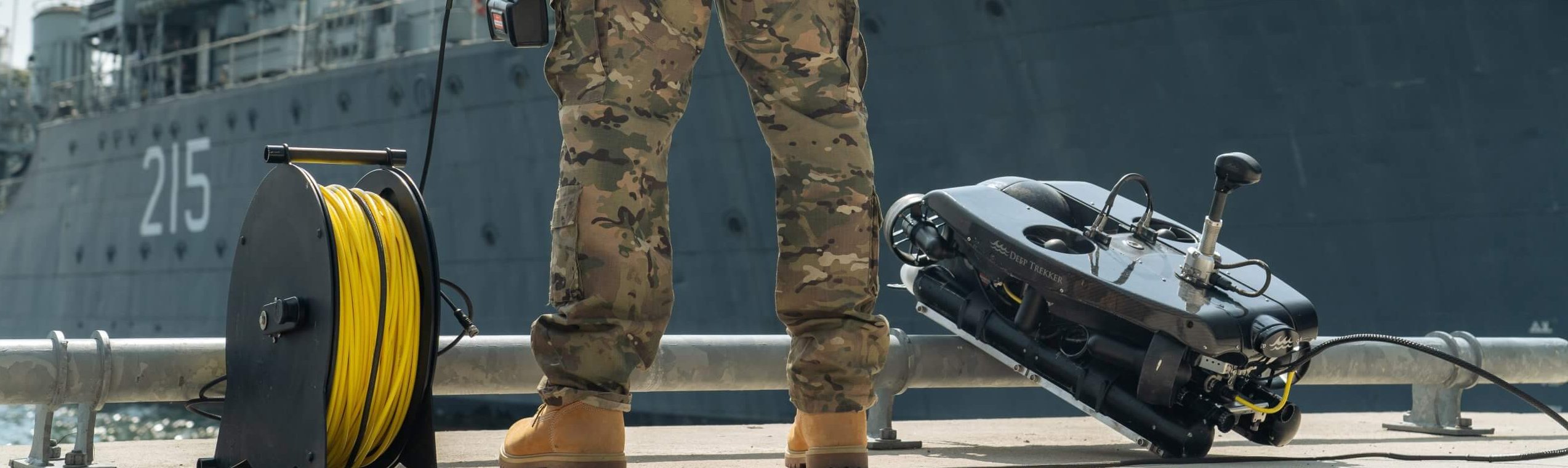
For the Municipality of Roermond, we carried out an inspection that was anything but standard. It involved a pipeline that had not yet been fully mapped and ran partly alongside and even beneath railway tracks. This location made it particularly complex, as parts of the route were simply inaccessible due to strict railway safety regulations. However, it became possible using an underwater drone.
Nevertheless, insight into the condition of the sewer was essential. The municipality needed to understand its state and assess potential risks. A subsided sewer beneath a road or railway can cause serious safety issues.
“We were dealing with a very specific problem,” says Niek Joris, sewer and water specialist at the Municipality of Roermond. “We first tried using an aerial drone, but that wasn’t a solution. Then we started looking for alternatives and found H2O Drones, a company we hadn’t worked with before.”
Why standard inspections did not work
“What stood out to me immediately was how safely H2O Drones operates and how they actively think along with you,” Joris explains. “This case was new to us, but their expertise gave us instant confidence.”
This was far from a standard inspection. The pipeline was largely dry and had a relatively small diameter, making human entry unsafe. A wheeled sewer robot was also not an option due to the risk of it falling into a manhole and being lost. A different approach was needed.
The solution was underwater
To make the inspection possible, the pipeline was sealed at both ends with inflatable stoppers and partially filled with water. This created a controlled environment where an underwater drone could operate without entering the railway area.
However, someone still had to enter the manhole to install the stoppers. Our colleague Thom Huitema, professional diver and ROV operator, carried out this task together with Erik Pluim and Roy Strijker.

Dion de Vries, technical specialist in gas detection and breathing protection at Boels, supported the work as a safety advisor. “In 35 years, I have never seen anything like this: an underwater drone inspection inside a sewer.”
Safety and craftsmanship
The preparatory work was carried out using breathing apparatus due to the confined space. Equipment included a breathing air system, a rescue davit and approximately 110,000 liters of water.

De Vries was impressed: “In one word: fantastic. You can see the level of control and that safety always comes first. Every detail is considered.”
The inspection itself
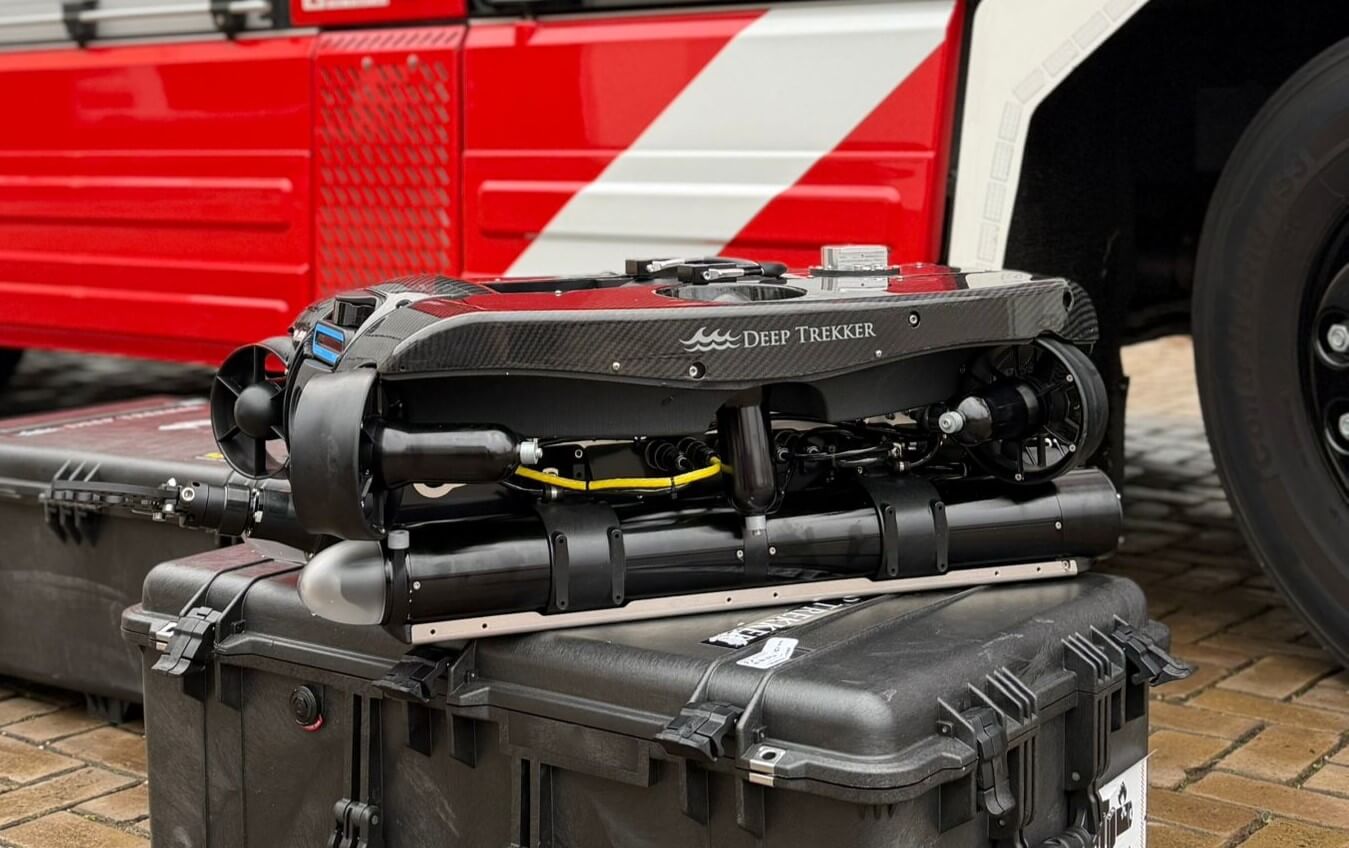
After preparation, the inspection was carried out using a Deep Trekker REVOLUTION ROV underwater drone. It features a camera for above water sections and sonar for underwater mapping. ROV operator Erik Pluim mapped the entire route step by step, including areas that were physically inaccessible.

“Many companies stick to fixed methods,” says De Vries. “What I saw here was innovation on a scale I had never experienced before.”
Data driven inspection
The inspection produced both camera footage and sonar data. This revealed a masonry culvert, with clear wear in the joints. Based on these insights, the municipality can take informed next steps, such as preventive relining.
“All previously unknown sections have now been identified and recorded,” says Joris. The sonar data, however, was less familiar and harder to interpret.
That is why we process the sonar data into one clear and complete visual, a method we call sonar optimization.

Looking ahead
According to De Vries, this project shows how safety and innovation go hand in hand. “Especially considering the team consisted of relatively young professionals.”
For the municipality, this was an eye opener. “We will definitely use underwater drones more often,” says Joris.
“It was a strong combination of people and technology,” concludes De Vries. “Safety is clearly central.”
Joris adds: “The team’s expertise gave us great confidence. Everything felt controlled, professional and above all safe.”